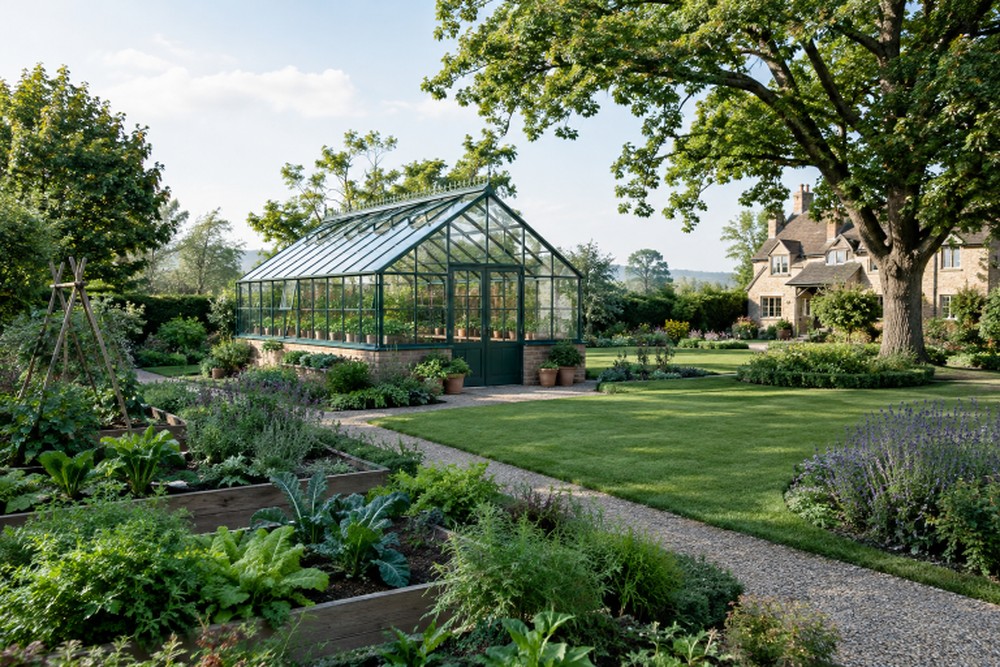
A well-planned glasshouse can be a productive growing space, a protected home for tender plants, and a comfortable place to spend time outdoors. Whether you are considering luxury greenhouses or a simpler garden structure, the most useful design begins with how you expect to use it each day.
Planning for all four seasons means looking beyond the structure itself. Sunlight, drainage, ventilation, storage, plant choices, and access all affect whether a glasshouse stays enjoyable and useful throughout the year.
1. Decide What The Glasshouse Needs To Do
Start by identifying the role the space will play in your garden. A glasshouse may be used to start seedlings, grow vegetables and herbs, display flowers, shelter frost-sensitive plants, or provide a bright place to sit and work. These goals can overlap, but one should take priority when space is limited.
Write down your top three intended uses and rank them. For example, a vegetable-focused glasshouse needs room for mature crops and access for watering, while a propagation space benefits from a generous potting bench, shelving, and organized storage. A relaxing garden room needs clear circulation and seating that does not interfere with plant care.
2. Choose A Practical Site
Location has a greater effect on daily success than decorative details. Before building, observe the proposed area at several points during the day. Look for shade from homes, fences, trees, and tall shrubs, then check whether water gathers after heavy rain.
- Measure the route for deliveries, tools, and replacement glazing.
- Check whether water and electricity can be provided safely if needed.
- Leave working room around the outside for cleaning and maintenance.
- Consider prevailing winds and exposure to severe weather.
- Choose stable, well-drained ground suitable for the planned foundation.
When evaluating placement, a south-facing long axis can help maximize incoming sunlight where the site allows it, although surrounding shade and the times of year you plan to grow still matter.
3. Plan Sunlight And Orientation
There is no single orientation that suits every garden. Morning light can gently warm a glasshouse, while intense afternoon sun may make summer temperature management more demanding. Nearby structures can block low winter light, and deciduous trees may shade the space in summer while dropping leaves onto the roof in fall.
Sketch the sun path across your yard before construction. Include existing buildings, mature trees, and any future landscaping plans. This simple exercise can reveal whether the chosen location will support winter growing, summer crops, or a mix of both.
4. Prepare For Heat, Cold, And Airflow
A glasshouse needs a plan for both releasing and retaining heat. Roof vents, side vents, doors, shade cloth, and circulation fans can all improve airflow. Monitoring temperature and humidity helps you respond before plants become stressed.
Good ventilation can reduce trapped humidity and help limit conditions that favor fungal diseases. The importance of roof vents and sufficient airflow is especially clear in a growing space filled with dense foliage, moist compost, and regularly watered containers.
Useful Climate Controls
- High-level roof vents for warm air to escape.
- Doors or side openings that support cross-ventilation.
- Shade cloth for bright, hot periods.
- Thermometers and humidity monitors placed near plants.
- Appropriate frost protection for plants that need it.
- Insulating materials or thermal screens where they suit the structure.
5. Create A Layout That Is Easy To Use
Plan the interior before purchasing benches, containers, and shelving. Leave a central path wide enough to carry a watering can, tray, or harvest basket without brushing against plants. Remember that tomatoes, cucumbers, and ornamentals may occupy much more room at maturity than they do when first planted.
Suggested Layout Zones
- Growing zone: Beds, pots, shelves, or raised containers.
- Work zone: A durable surface for sowing, potting, and pruning.
- Storage zone: Room for tools, labels, trays, compost, and watering supplies.
- Access zone: Clear paths to vents, doors, and plants at the back.
- Rest zone: Optional seating that makes the space pleasant to use.
6. Match Plants To Growing Conditions
A glasshouse does not create identical conditions in every corner. Areas near doors may be cooler, upper shelves may be warmer, and tightly planted sections may stay more humid. Choose plants according to the conditions you can maintain, then group those with similar needs together.
- Cool-season crops: Leafy greens, hardy herbs, and young seedlings.
- Warm-season crops: Tomatoes, peppers, cucumbers, and basil.
- Tender ornamentals: Plants that benefit from frost protection.
- Dry-climate plants: Succulents and plants that prefer lower humidity.
Keep a simple record of sowing dates, watering routines, pest observations, harvests, and plant losses. Over time, those notes make it easier to refine your approach for the next season.
7. Build A Four-Season Growing Plan
Spring
Clean glazing, inspect vents, organize tools, and start seeds suited to your local planting schedule. This is also a good time to test watering routines before the space becomes crowded.
Summer
Prioritize ventilation, shading, watering, and regular harvesting. Check plants often during hot weather, since enclosed spaces can change temperature quickly.
Fall
Use the space for late crops, cuttings, and tender plants that need protection. Remove unhealthy plant material and clean pots before bringing them inside.
Winter
Expect slower growth and lower light. Focus on hardy crops, protected plants, careful watering, and planning for spring rather than trying to force every crop through the coldest period.
8. Avoid Common Planning Mistakes
- Choosing a visually attractive site that receives too much shade.
- Ignoring drainage or maintenance access around the structure.
- Underestimating summer heat and the need for ventilation.
- Allowing too little space for paths, storage, or mature plants.
- Growing plants with sharply different humidity and temperature needs together.
- Focusing on appearance while overlooking daily tasks such as watering and cleaning.
9. Questions To Ask Before Building
Can A Glasshouse Be Useful Without Heating?
Yes. An unheated glasshouse can protect plants from wind and rain, extend the growing season, support seedlings, and provide space for cool-season crops. Plant selection should match the temperatures available in your area.
Should The Glasshouse Be Near The House?
A nearby location can make watering, harvesting, and winter checks easier. However, convenient access should not outweigh the need for suitable light, drainage, and airflow.
What Should Be Planned First?
Start with intended use and site conditions. Then choose the structure, layout, utilities, and surrounding planting scheme as parts of one practical garden plan.
Conclusion
The best glasshouse garden is not necessarily the largest or most elaborate. It is the one that fits the site, supports the plants you want to grow, stays manageable in changing weather, and remains inviting enough to use throughout 2026.