Why Smart Warehouses Are Becoming Business Lifelines
Warehouses were formerly business’s silent cousins. It held boxes in the background and avoided drama. Those days passed. The warehouse is now like an exhausted stage manager in a frantic play show, trying to keep every prop in position while performers run in and out yelling for quick results.
Customers want speed. Retailers want accuracy. Managers want fewer headaches, fewer delays, and fewer moments where someone asks, “Did we ship that already?” A smart warehouse answers those demands by replacing guesswork with systems that can see, report, and react in real time.
This movement goes beyond trends. It improves facility reliability under pressure. Inventory tracking, equipment reliability, and intentional processes make the firm feel like a well-rehearsed orchestra rather than a traffic jam. Possibly a loud orchestra with forklifts blaring, but organized.
Digital Systems That Stop Inventory From Playing Hide and Seek
One of the biggest warehouse frustrations is simple to describe and miserable to experience. Something says it is in stock, but nobody can find it. It is the business equivalent of knowing your keys are somewhere in the house while you are already late.
Teams may see inventory movement, order progress, receiving activities, and outgoing shipments in real time with modern digital warehouse systems. Businesses use a centralized platform that changes as tasks occur instead of dispersed notes, spreadsheets, and superhuman memory.
Visibility increases more than organization. It alters behavior. Supervisors can notice recurrent bottlenecks before they become crises. Using current figures instead of forecasts gives purchasing teams more confidence to order. Service reps can provide precise information without seeming like fortune tellers.
When departments share the same operational picture, the warehouse becomes less reactive. Small problems get caught sooner. Large problems stop multiplying like rabbits in a vegetable patch.
Entry Points Matter More Than Most People Realize
A warehouse can have brilliant software, disciplined staff, and shelves organized with almost sacred devotion, but if goods cannot move in and out smoothly, the place still stumbles. Entry points shape the rhythm of the whole building.
High-performance doors and dock systems impact enterprises more than expected. At congested loading zones, fast-opening doors save time. Insulated models keep inside temperatures stable, which is important for temperature-sensitive items. Tough construction saves wear-related downtime.
Security matters here too. Warehouses often hold valuable inventory, expensive equipment, and enough useful merchandise to tempt opportunists. Strong door systems, reinforced closures, and controlled loading areas create a more secure perimeter without turning daily logistics into a medieval siege.
A reliable access point is like a good referee. Nobody talks about it when it works, but when it fails, everyone suddenly has strong opinions.
Automation That Helps Humans Instead of Replacing Them
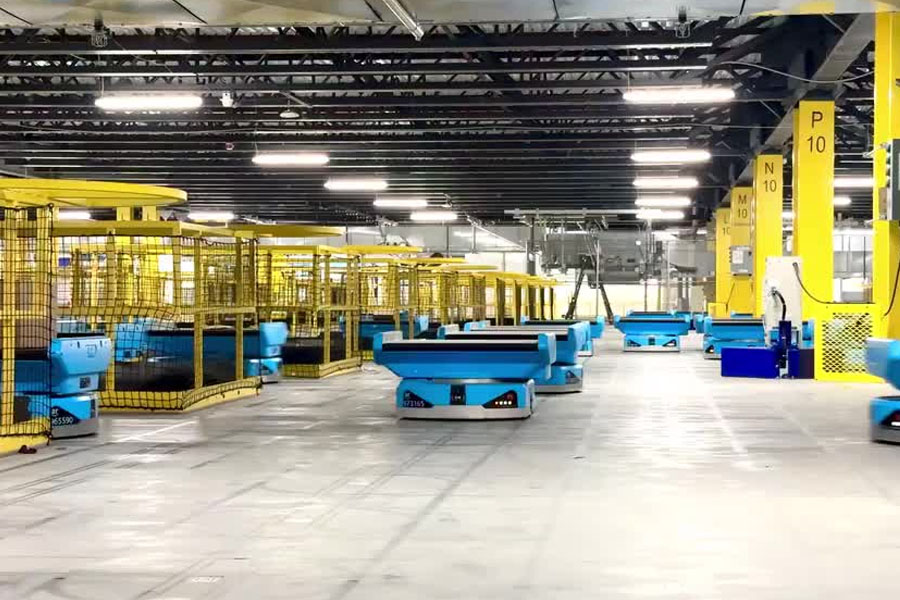
Warehouse automation often gets pictured as a metallic uprising starring cheerful robots and worried employees. In reality, the most effective automation is usually much less dramatic and much more practical.
Automated storage systems, guided retrieval tools, and task specific robotics reduce wasted motion. Workers spend less time walking endless aisles, bending, lifting, and hunting for misplaced items. Instead, systems bring products closer to the point of need or direct staff along efficient paths.
This has benefits beyond speed. Avoiding needless motions reduces physical strain. Better task direction cuts mistakes. More predictable procedures simplify new hire training. Automation helps organizations prevent sweating emergencies during high volume periods.
The key is balance. Smart facilities employ machines for repetition, consistency, and heavy lifting while people judge, troubleshoot, and quality check. Robots can do the same thing 1,000 times. Humans notice when the thousandth box sounds like shattered glass better.
Tracking Technology That Keeps Goods From Going Rogue
Inventory tracking becomes powerful when it moves beyond periodic counting and enters the world of constant awareness. Barcode systems and RFID tools allow teams to know what arrived, where it went, what moved, and what should not have vanished into the mysterious void behind aisle twelve.
This kind of visibility reduces overstocks and stockouts at the same time. Businesses can replenish more accurately because they know what is truly available. They can also detect discrepancies earlier, before a minor issue grows fangs and starts biting service levels.
Tracking tools are more useful with environmental monitoring. In facilities that store food, medical supplies, electronics, cosmetics, or other delicate items, temperature and humidity might be as critical as quantity. Smart sensors may detect changes before items are compromised, allowing teams to respond before apologizing.
With stronger tracking, a warehouse stops being a dark cave full of educated guesses. It becomes a place where information travels as quickly as the products themselves.
Smarter Energy Use Cuts Waste Without Cutting Performance
Energy upgrades may not sound glamorous, but neither does paying oversized utility bills month after month. Smart warehouses treat energy performance as an operational strategy, not just a maintenance concern.
LED lighting saves energy and increases sight. Safer illumination is important in facilities with heavy forklift activity, early morning shifts, or areas where labels must be read quickly and precisely. Motion sensors keep lights on just when work is done, adding convenience.
Climate control matters too. Products, equipment, and workers benefit from indoor stability. A warehouse that is cold in winter and hot in summer is inefficient. It leads to complaints, errors, and innovative efforts to stand in front of any fan.
More advanced facilities also use zoning strategies, insulation improvements, and system monitoring to avoid wasting energy in low activity spaces. Over time, these changes support lower operating costs without sacrificing functionality.
Security Has Moved Beyond Locks and Good Intentions
Warehouse security used to lean heavily on physical barriers and the hope that everyone would behave. Modern operations require more layered protection.
Video surveillance illuminates docks, aisles, staging spaces, and restricted rooms. Clear footage aids incident evaluation and daily management. Without floor reports, teams can detect bottleneck locations, validate procedures, and track activity trends.
Access control adds precision. Digital credentials, restricted zones, and logged entry records help businesses protect sensitive inventory, expensive tools, and confidential materials. This is especially useful in facilities where not every employee needs access to every area.
Security also supports accountability in subtle ways. When movement is tracked and entry is controlled, processes tend to become more disciplined. People generally make better choices when they know the building has a memory.
Data Can Reveal Space That Is Hiding in Plain Sight
Many warehouses run out of space long before they truly run out of capacity. The real problem is often poor placement, congested flow, or underused vertical storage.
Data analysis helps managers understand how the facility actually behaves. Which products move fastest. Which zones create delays. Which pick paths waste time. Which areas attract clutter like a magnet coated in bad habits.
Layout decisions improve with such insights. High-demand commodities might be near packaging stations. Expected volume affects seasonal commodities. Slow movers might be distant from main highways. Changing aisle configurations can minimize crossing traffic and increase safety.
This is where analytics becomes deeply practical. It does not exist to produce pretty dashboards that impress people in meetings. It exists to help a warehouse move more goods with less friction, less wandering, and fewer moments of silent rage over a pallet parked in the worst possible place.
Flexible Robotics Make Growth Less Painful
One of the most useful traits in warehouse technology is scalability. Businesses do not always need massive overhauls. Often they need upgrades that can grow in stages without causing operational whiplash.
Collaborative robots are especially useful here. They can assist with sorting, scanning, labeling, or palletizing while working alongside human teams. Because they are modular, companies can add them gradually as order volume increases or labor demands shift.
This creates breathing room. A warehouse can expand output without immediately redesigning the entire facility or hiring at an unsustainable pace. Accuracy also improves because repetitive tasks become more standardized.
Flexible automation gives businesses the ability to grow with less chaos. And in warehousing, less chaos is a beautiful thing.
FAQ
What makes a warehouse smart instead of simply modern
A smart warehouse does more than look updated. It uses connected systems, real time visibility, automation, and data based decision making to improve how goods move, how space is used, and how problems are prevented.
Is warehouse automation only useful for large companies
No. Smaller businesses can benefit from targeted automation such as barcode systems, guided picking tools, smart sensors, or modular robotics. The value often comes from choosing upgrades that solve specific operational pain points.
How do smart upgrades improve customer service
They improve order accuracy, reduce shipping delays, and provide better inventory visibility. That means customers are more likely to receive the right item on time, and support teams can provide clearer answers when questions arise.
Are energy upgrades really worth the investment
In many cases, yes. Efficient lighting, better insulation, and smarter climate control can lower utility costs while also improving safety, comfort, and product protection inside the facility.
Why is data analysis important in warehouse planning
Data analysis shows how the facility actually performs instead of how people assume it performs. It helps managers improve layout, reduce congestion, place high demand items more effectively, and plan growth with fewer costly mistakes.