Running physical security on a separate infrastructure may create unnecessary overhead. A cloud based system consolidates physical security into the same model organizations already use for other software. Here is more information on how to maximize efficiency with a cloud based security system:
Eliminating On-site Hardware
Traditional physical security systems may require on-site servers, dedicated computers, and software. Organizations must maintain and eventually replace each component as they become outdated. Because the software required to run a cloud based security system is hosted off-site and maintained by the provider, organizations won’t need to manage on-site equipment. IT staff no longer manage security-specific server infrastructure; updates occur automatically rather than scheduled as a manual task. When a camera system runs on a cloud platform, video recorders become unnecessary. The cloud platform makes footage accessible at any time. For organizations managing multiple facilities, this advantage compounds. Instead of maintaining separate on-site infrastructure at each location, a single cloud platform covers every site.
Centralizing Control for Operations
One benefit of cloud based security is the ability to manage everything through a single dashboard. Access control, cameras, and intercom systems can all be administered from one interface. Users have the option to access it from any device; this includes a desktop or mobile device.
Cloud based access control makes credential management easy and straightforward. Administrators can issue and revoke access credentials instantly, audit entry activity in real time, and integrate the system with HR or directory platforms for automated provisioning. When an employee’s status changes, their access permissions update without requiring a manual process at each door or location.
A centralized model supports scalability. A system that starts with a single door can expand to cover multiple entrance points, secure rooms, lobbies, and facilities across different regions; it’s all managed from the same platform. Because the infrastructure is cloud based, adding locations does not require building new on-site server capacity. The platform scales as the organization does, and the administrative overhead can stay consistent.
Managing Remote Access
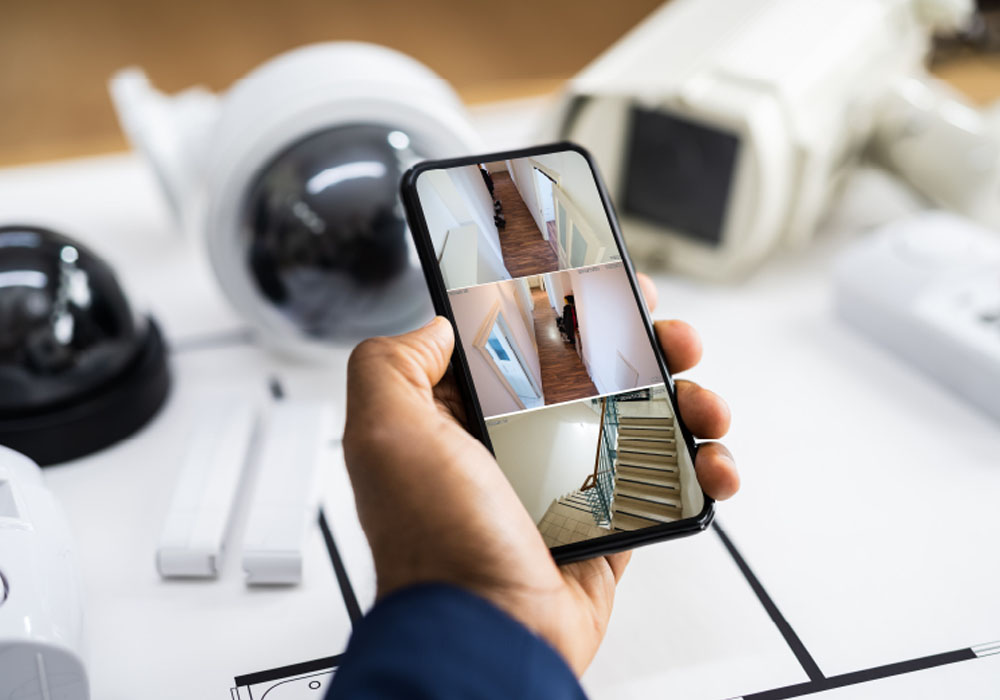
Cloud based security systems are accessible wherever there is an internet connection; this is particularly relevant for organizations where facilities are not continuously staffed. Managers don’t need to be on-site to respond to access requests, review camera footage, or change system settings. When a vendor or delivery arrives at an unstaffed building, the intercom call routes directly to a staff member’s mobile device. That staff member can verify the visitor’s identity remotely and grant or deny access without being physically present. The same principle applies to access control: administrators unlock doors, update permissions, or respond to alerts from any location.
All footage is viewable through the cloud platform. You don’t need to be on-site or connected to a specific recorder to review video. The cloud automatically updates camera software, so footage and system performance stay current without scheduled maintenance visits.
Integrating Security Operations
Efficient security operations depend on how well individual components work together. If an access event occurs, it can automatically trigger linked video verification. When a visitor uses the intercom, the system connects to the same platform managing door access. This integration helps reduce the number of separate tools security teams need to monitor and operate.
Cloud based access control also supports modern credential formats, including mobile credentials and biometric readers for high-security areas. These options reduce dependence on physical key cards, which require physical distribution, replacement when lost, and manual deactivation when no longer needed. The platform manages mobile and biometric credentials end-to-end; this makes provisioning and revocation faster and more reliable.
Some organizations are in regulated environments, such as healthcare facilities, dispensaries, and research labs, so this integrated approach also simplifies compliance. Access logs and permission histories are centralized. They’re also accessible without manual reporting from multiple disconnected systems.
Choose a Cloud Based Security System
A cloud based system reduces the infrastructure organizations need to own and maintain. They help centralize control across locations, enable remote administration, and connect access control; each capability directly reduces the time and complexity of running physical security. Electronic security systems help with single-door access control and multi-site deployments. Contact a cloud security provider today to learn more about their benefits.