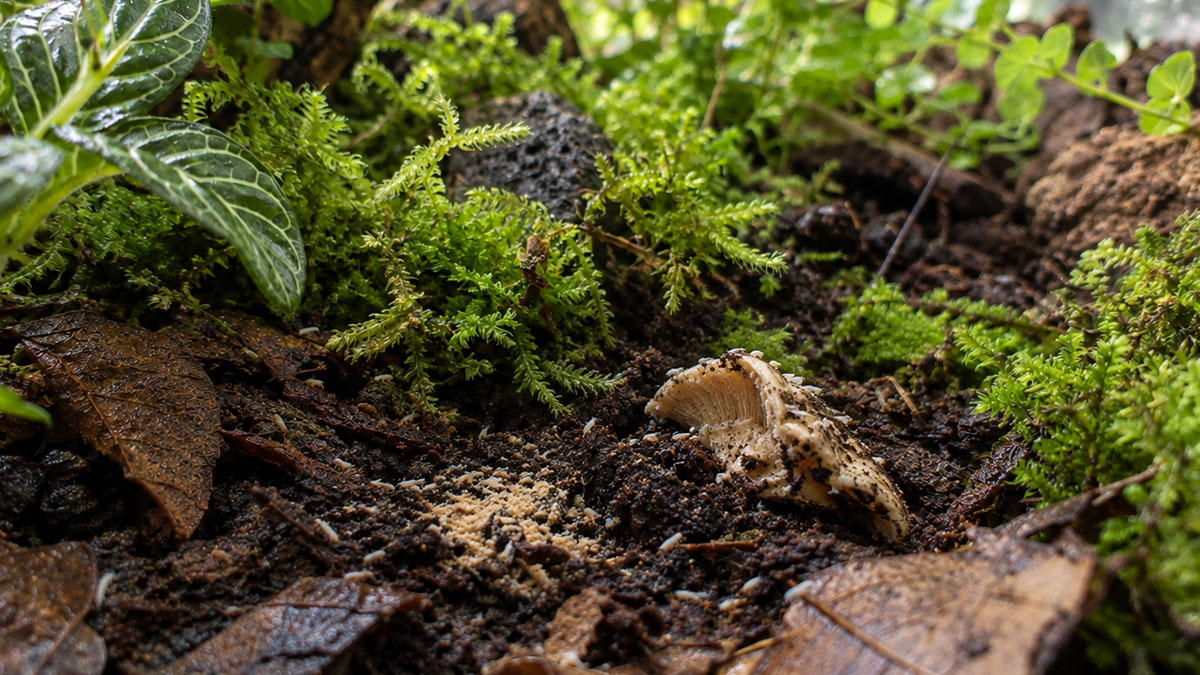
Springtails are small decomposers that have an important role in bioactive terrariums, vivariums, and culture systems. They eat things like fungi, mold, small living things, biofilm, algae, and rotting plant matter. The way they eat helps break down waste. This makes the small ecosystem healthier.
For keepers, feeding springtails is pretty easy. You just need to give them a little bit of the right food. You should keep things moist but not too wet, and do not give them too much food. If you know what they eat in nature, it gets easier to grow a good group of springtails. This helps make sure they do well for a long time.
Understanding Their Natural Diet
Springtails mostly feed on very small living things and dead plants, not large pieces of food. In nature, you can find them in wet soil, old leaves, rotting wood, and places that are full of fungus and tiny life forms.
This is why they work well in bioactive tanks. When things break down, fungus and small life forms start to grow. Springtails feed on these things. They help put the good stuff back into the tank.
Common natural food sources include:
- Fungi and fungal spores
- Mould
- Bacteria and microorganisms
- Biofilm
- Algae
- Decaying leaves
- Decomposing plant matter
- Fine organic debris
A good setup can give most of the food that a springtail group needs on its own.
Suitable Foods for Cultured Colonies
A dedicated culture will often need extra feeding at times. This is because it may not have enough of what it needs for the group to grow well. Simple foods are usually enough. It is better to give small amounts instead of large feedings. For people who are new to this, postpods are a good way to start with springtail culture. You can learn about what these small animals need to live; it helps you get a feel for the basic way to take care of them.
If you want to keep springtails for sale uk, you need to know what they eat. This is very important right after you add a starter colony. You should make sure there is enough water and food, and that the room stays steady. This will help them grow well.
1. Yeast
Brewer’s or baker’s yeast is one of the most convenient choices. A small pinch over the culture gives a food source that worms can get to easily. It is also easy to measure out.
Because springtails are very small, you only need a little bit.
2. Rice
A few pieces of rice can be useful for this. Rice takes in water and slowly starts to break down. As it breaks down, small living things and fungus can grow on it. Springtails can eat this growth.
3. Mushroom
Small bits of mushroom can be another food source for springtails at times. It breaks down fast. This helps more tiny living things grow that springtails can use for food.
4. Specialist Foods
Commercial springtail foods are good for people who look after a lot of cultures. They make it easy for you to feed your springtails. You can give them the same amount each time.
5. Crushed Fish Food
You can sometimes use very small amounts of finely crushed fish flakes. But you have to give protein-rich food in small amounts, because it can go bad fast when the culture is warm and moist.
How Much and How Often Should You Feed Them?
Springtails do not need a lot of food. You should give them food based on how much they eat and not by sticking to a fixed plan. Put in a small bit of food and check how fast they eat it over the next few days.
| Factor | Why It Matters |
| Colony size | Larger colonies generally need more food |
| Moisture | Springtails require consistently damp conditions |
| Temperature | Activity and feeding rates vary with conditions |
| Food type | Some foods decompose faster than others |
| Culture age | Established populations may consume more |
| Population density | Dense colonies can process food quickly |
When most of the old food is gone, you can give a little more. If there is still a lot of food left, wait before you feed again.
For many cultures that have been around for some time, doing this once or twice a week can be a good place to start. But the colony will be the one to set the final routine in the end.
Why Overfeeding Causes Problems
Adding more food will not always help a springtail colony grow faster. Too much food can start to rot before the springtails eat it. This can lead to too much mould, bad smells, and other things you do not want.
Watch for:
- A lot of food that isn’t eaten
- Bad smells that do not go away
- Food or stuff breaking down too much
- A lot of fungus growing
- More and more unwanted mites
- Springtails not moving or doing less
It’s normal to see some mould because fungi are a part of what springtails eat. The real problem happens when there is too much mould. This means there is more food than what the colony of springtails can eat.
Feeding Springtails in Bioactive Enclosures
A mature bioactive enclosure can give enough natural food. Because of this, you may not need to add extra food all the time. Leaf litter, old plants that break down, fungi, small living things, and biofilm can keep making food. This means your animals can always find something to eat.
New enclosures are not the same as old ones. There may not be a good group of microbes in the beginning. Sometimes, you can give some extra food to help a new group of animals get used to it. This helps them build up over time.
The basic cycle looks like this:
Organic matter → microbes and fungi grow → springtails feed → things break down → nutrients get used again
Springtails help a lot with cleaning in a bioactive setup. This is one reason they are so useful for this job. By following the care tips from postpods, people can keep the right amount of moisture. They can also make sure the environment stays good for their chosen springtails.
Creating the Right Conditions
Food alone cannot keep a healthy culture. Springtails also need the right conditions in their surroundings.
Maintain Moisture
The culture needs to stay damp. It should not be too wet. If you keep the moisture steady, it helps normal activity and growth.
Maintain Suitable Temperatures
Different types of springtails like different temperatures. For example, there are tropical springtails that need the air to be warm and wet. Some from cooler places do not need things as warm or damp. You should always read and follow the care guides for the kind you have.
Monitor the Population
Do not think that there is something wrong with the colony just because you see only a few of them. The springtails may stay inside the dirt or base. They do this more when they have plenty of food and water.
Common Feeding Mistakes
Even the colonies that are easy to take care of can have problems when you feed them too much. Do not do the following:
- Putting in a lot of food at once
- Letting old food stay there for a long time
- Using food that has a lot of oil or spices
- Letting the culture dry out
- Keeping the soil too wet all the time
- Giving more food just because the springtails are hard to spot
A small feeding plan that you keep track of is usually better than always needing to step in.
Frequently Asked Questions
What is the best food for springtails?
Yeast is easy to use for many cultures. You can also use rice, mushroom, special springtail food, or a little bit of crushed fish food.
Do springtails eat mould?
Yes. Mould and fungi are a key part of what they eat in the wild. But, too much mould in the tank can point to too much water or old things breaking down inside.
Can springtails eat rice?
Yes. You can add some grains to the culture. They will get soft, and as tiny life forms grow on them, they become good food.
How often should springtails be fed?
Many people in established cultures can feed them about one or two times each week. But it is better to see how much they eat instead of just following a set schedule.
Do springtails need feeding in a bioactive terrarium?
No, not always. A set-up bioactive system can make fungi, tiny life forms, biofilm, and things that are breaking down. The springtails can eat all of this.
Conclusion
Springtails are easy to care for. You do not need to follow hard feeding steps. They mostly eat fungi, mould, some microorganisms, biofilm, algae, and any rotting organic matter. This helps them live well in places where things are breaking down.
If you want to know what do springtails eat, it’s best to give them small parts of good food if the things they find in nature are not enough. Keep the area wet, and watch what they eat often. If you plan to start a group of springtails, postpods can help you learn about these easy-care bugs and the way they help in bioactive systems.
The most important thing is balance. You need to give enough food to support the colony, but not so much that any extra food is left and causes problems. When there is the right amount of water, food, and good conditions, springtails will quietly make more of themselves and do their job in a working small ecosystem.