Choosing a new roof involves more than selecting a durable material. The finish and color influence how a home looks, how its exterior responds to sunlight, and how the roof’s appearance changes over time. These decisions deserve careful attention because roofing occupies a substantial portion of a home’s visible exterior.
Metal Roofing offers homeowners several choices in surface finishes, profiles, and colors. However, products that appear similar in photographs may differ in coating technology, reflectivity, texture, and manufacturer specifications. Understanding these differences helps homeowners compare options without relying entirely on appearance.
Emerald Roofing and Siding LLC can help homeowners consider finish selections alongside the home’s architectural features and roofing requirements. A thoughtful decision balances personal preferences with practical considerations such as climate, maintenance expectations, and product documentation. The goal is a roof that complements the property while providing performance appropriate to its design.
Understanding the Purpose of Roof Finishes
A metal roof finish does more than create a decorative appearance. Factory-applied coatings help protect the underlying material while providing a consistent color and surface texture. Their performance depends on coating formulation, application quality, and environmental exposure.
Different products may use distinct paint systems or protective treatments. Some are designed with particular emphasis on color retention, while others offer different combinations of durability and appearance.
Homeowners should review manufacturer information rather than assume every painted panel performs identically. Product specifications provide a more reliable comparison than color samples alone.
How Roof Color Influences Exterior Appearance
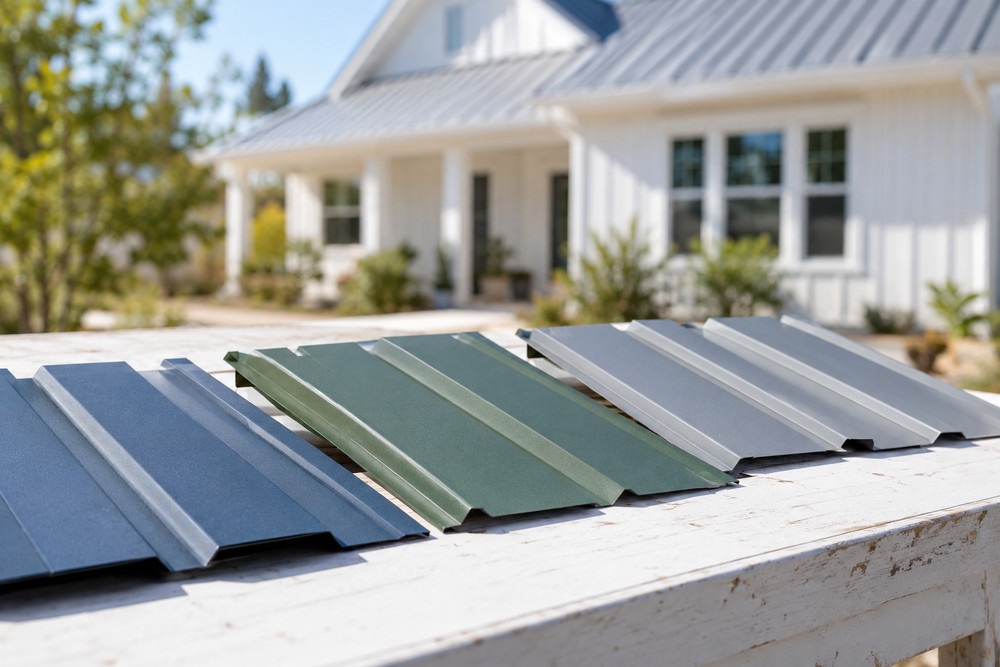
Roof color can change the visual character of an entire house. Darker shades may create stronger contrast with light siding, while softer tones can produce a more understated appearance. The effect also depends on trim, windows, masonry, and surrounding landscaping.
A color that looks appealing on a small sample may appear different across a large roof. Roof pitch and viewing distance can further influence perception.
Compare Colors Against Existing Features
Homeowners should examine potential colors alongside permanent exterior materials. Brick, stone, and other finishes that are unlikely to change deserve particular consideration. Coordinating these elements creates a more consistent overall appearance.
Reflectivity Matters Beyond Color Alone
Roof surfaces absorb and reflect different amounts of solar energy. Lighter colors often reflect more sunlight than darker alternatives, although coating technology can significantly influence actual performance. Visual color alone does not establish a product’s measured reflectivity.
Some darker roofing finishes incorporate reflective pigments. Their performance should be evaluated through published product ratings rather than assumptions.
Emerald Roofing and Siding LLC can discuss relevant material options while homeowners compare documented characteristics. Local climate, insulation, ventilation, and building design also influence the potential benefits of reflective roofing.
Understanding Solar Reflectance and Thermal Emittance
Solar reflectance describes how much incoming solar energy a surface reflects. Thermal emittance concerns how effectively a surface releases absorbed heat. Both characteristics can influence roof surface temperatures under particular conditions.
Manufacturers may publish these measurements for individual products and colors. Ratings should be compared using consistent testing information whenever possible.
These values do not predict household energy savings by themselves. Building insulation, attic design, climate, and cooling systems contribute to overall performance.
Matte and Glossy Finishes Create Different Effects
Surface sheen affects how roofing interacts with daylight. Glossy finishes may produce more noticeable reflections, while matte finishes generally create a softer visual effect. Texture and panel shape also influence how light moves across the roof.
The appearance of a finish can change with weather and viewing angle. A sample examined indoors may not accurately represent its outdoor appearance.
Homeowners should request suitable physical samples when available. Viewing them under natural lighting can make comparisons more meaningful.
Coating Quality Influences Long-Term Appearance
Roof coatings experience prolonged exposure to sunlight, rain, temperature changes, and airborne contaminants. Over time, some finishes may show fading, chalking, or other changes in appearance. The rate and extent depend on the product and environment.
Higher performance coating systems may offer improved resistance to certain forms of weathering. However, claims should be supported by manufacturer specifications and applicable testing standards.
A careful comparison includes coating type, warranty terms, and recommended care. These details help homeowners understand what a finish is designed to withstand.
Why Color Samples Can Be Misleading
Small samples provide useful information, but they have limitations. A compact panel cannot fully reproduce how sunlight and shadows affect an entire roof. Nearby siding and landscaping can also change perceived color.
Photographs introduce additional uncertainty because screens and camera settings alter color reproduction. Online galleries are helpful for inspiration but should not be the sole basis for a final decision.
Evaluate Samples in Different Lighting
Homeowners can compare samples during morning, midday, and afternoon light. Observing changes throughout the day reveals differences that may be difficult to notice during a single viewing. This approach supports more confident color selection.
Roof Profile Changes the Visual Result
The shape of roofing panels influences the finished appearance. Standing seam systems create different lines and shadows from metal shingles or other profiles. Panel width, rib height, and roof geometry all contribute to the overall effect.
A bold color on a highly textured profile may appear different from the same shade on broad, relatively smooth panels. Architectural compatibility therefore involves both color and form.
Metal Roofing selections should consider these features together. Choosing a color before reviewing available profiles can overlook an important part of the finished design.
Consider the Home’s Architectural Character
Roofing should complement the proportions and style of the building. Traditional homes may benefit from understated finishes, while contemporary designs can accommodate stronger contrasts or simpler visual lines. These are design considerations rather than rigid rules.
Exterior materials also influence the result. Wood, brick, stone, stucco, and manufactured siding each interact differently with roof colors.
Homeowners should evaluate the entire facade instead of treating the roof as an isolated surface. A balanced combination can remain visually appealing through future exterior updates.
Climate and Exposure Affect Finish Decisions
Roof finishes experience different conditions depending on location. Strong sunlight, coastal exposure, airborne pollution, and frequent moisture can influence material selection and maintenance requirements. Manufacturers may specify limitations or recommendations for particular environments.
Coastal properties, for example, can face exposure to salt-laden air. Appropriate substrate and coating selection may be especially relevant under those conditions.
A product suitable for one setting may not be the preferred choice elsewhere. Homeowners should confirm environmental compatibility before committing to a finish.
Maintenance Expectations Deserve Attention
No exterior finish remains completely unaffected by its environment. Dust, pollen, organic debris, and other deposits can alter the roof’s appearance between cleaning or maintenance activities. Certain colors may make surface deposits more noticeable.
Homeowners should follow manufacturer recommendations for inspection and cleaning. Improper cleaning methods can damage protective finishes or affect warranty coverage.
Emerald Roofing and Siding LLC can provide project-related guidance consistent with the selected roofing system. Maintenance planning should reflect actual product requirements rather than assumptions about all metal surfaces.
Read Finish Warranties Before Choosing
Warranty documents can differ substantially between manufacturers and products. Coverage may address particular coating characteristics, but exclusions, limitations, and claim procedures require careful review. A long stated warranty period does not necessarily mean every appearance change is covered.
Homeowners should distinguish material warranties from workmanship coverage. These protections may come from different parties and address different concerns.
Written documentation helps clarify expectations. It also provides useful information for future property maintenance.
Make a Selection That Balances Style and Performance
Choosing a roof finish requires considering appearance, coating characteristics, climate, and the home’s existing materials. Color matters, but it should be evaluated alongside reflectivity, weathering resistance, profile, and manufacturer guidance. No single finish is ideal for every property.
Metal roofing in Rockland County provides a range of design possibilities, making informed comparison especially valuable. Reviewing samples, published ratings, and warranty information helps homeowners distinguish meaningful differences between options.
A carefully selected roof can support the home’s architectural character while meeting practical performance expectations. By considering both immediate appearance and long-term conditions, homeowners can make a decision that remains appropriate well beyond installation day.