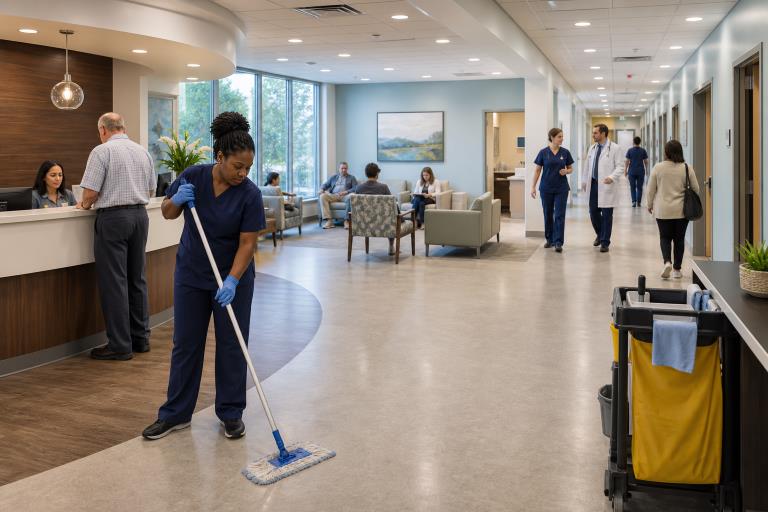
Healthcare cleaning is not a one-size-fits-all task. Medical offices, outpatient clinics, specialty practices, and larger healthcare groups all have different patient flows, room uses, and operational pressures. A smarter routine helps teams keep spaces ready for care while reducing confusion about who cleans what, when, and how.
For facilities comparing outside support with an in-house approach, healthcare facility cleaning services from CNS Cleaning Company offer an example of a structured program for waiting rooms, exam areas, staff spaces, restrooms, floors, and shared touchpoints. CNS Cleaning Company has operated since 1983 and supports healthcare organizations nationwide, with a strong presence in Pennsylvania, New Jersey, Bristol, and the Greater Philadelphia area. Its healthcare service model emphasizes customized scopes, trained teams, supervision, and ongoing quality checks.
Why Healthcare Cleaning Plans Need a Fresh Review
Healthcare facilities face steady pressure from patient turnover, shared equipment, waiting-room traffic, and frequent contact with counters, chair arms, door handles, rails, and devices. When cleaning is inconsistent, clinical teams may spend time following up on preventable issues, and patients may notice conditions that affect their confidence in the facility. A modern plan should support infection prevention goals while also helping every area look orderly, stocked, and ready for use.
Start With a Room-By-Room Risk Review
Begin with a walkthrough rather than a generic checklist. List patient-facing rooms and staff-only areas, then consider how each space is used, how often it is occupied, who enters it, and how difficult it is to clean during operating hours. The CDC’s environmental cleaning considerations for healthcare facilities reinforce the value of standardized procedures, training, monitoring, and feedback.
- Identify high-touch points in every room, including controls, handles, counters, keyboards, and mobile equipment.
- Flag spaces that need attention during the day, not only after closing.
- Separate routine tasks from cleaning required after a patient leaves or after a contamination event.
- Assign each task to a specific role, shift, or service partner.
- Document surfaces or room features that require special tools, products, or access procedures.
Build a Clear Cleaning Schedule
Use daily, weekly, monthly, and event-based schedules, but do not apply the same frequency to every department. Waiting rooms and reception areas may need repeated attention during busy periods. Exam and treatment rooms require room-specific turnover procedures. Restrooms and breakrooms need frequent checks for cleanliness and supplies, while administrative offices may follow a lower-frequency routine. Procedure rooms and other higher-risk spaces should follow the facility’s established clinical and infection prevention requirements.
Place schedules where supervisors and cleaning staff can review them quickly. Update them when patient volume, operating hours, construction activity, or room use changes.
Use the Right Process for High-Touch Surfaces
Visible cleanliness is important, but it is not the entire process. Address high-touch surfaces before lower-touch areas, remove visible soil when product instructions require it, and follow the disinfectant label for dilution, application, and contact time. Use products appropriate for the surface and intended healthcare setting. Change cloths, tools, mop heads, or solutions as needed to avoid carrying contamination from one area to another.
Stronger chemicals are not automatically better. Correct product selection and consistent application matter more than choosing a harsher formula. Keep tools clean, dry, labeled, and stored so they remain ready for the next task.
Make Training Practical and Repeatable
Onboarding is only the starting point. Provide short refreshers whenever products, equipment, room layouts, or procedures change. Hands-on demonstrations should cover personal protective equipment, chemical handling, room sequencing, shared equipment, waste handling, and hand hygiene before and after cleaning work. Checklists, visual reminders, supervisor observation, and documented follow-up make expectations easier to apply on a busy shift.
Improve Communication Between Teams
Environmental services staff, nurses, facility managers, and infection prevention personnel need a simple way to share updates. Establish a process for reporting spills, urgent requests, isolation precautions, damaged surfaces, and rooms that are ready for patient use. Briefly review repeat complaints or missed tasks together. Facility systems also deserve attention, because issues involving sinks, drains, water damage, or worn finishes can affect cleaning procedures and should be escalated promptly.
Track Simple Measures That Show Progress
A useful scorecard does not need to be complicated. Track missed or delayed tasks, repeat complaints by location, checklist completion, inspection findings, urgent-request response times, training completion, supply shortages, and equipment downtime. Review patterns by room, shift, department, and task type. The purpose is coaching and process improvement, not simply assigning blame to individual workers.
Choose a Cleaning Partner With Strong Accountability
Whether a facility uses in-house staff or a contractor, leaders should look for healthcare-specific training, background checks, written scopes of work, supervision, flexible scheduling, inspections, clear escalation procedures, and dependable after-hours communication. Multi-site organizations should also confirm that the provider can maintain consistent expectations across locations. Ask how issues are documented, who owns follow-up, and how performance results are shared.
Common Mistakes to Avoid
- Using the same cleaning frequency for every room.
- Relying on verbal instructions instead of written procedures.
- Overlooking shared equipment and mobile workstations.
- Skipping disinfectant contact-time instructions.
- Starting a busy shift without enough supplies or functioning equipment.
- Changing staff without a clear handoff or reviewing inspection results.
A Practical 30-Day Improvement Plan
- Days 1 through 7: Walk the facility and identify high-risk rooms, high-touch surfaces, and repeated problem areas.
- Days 8 through 14: Review schedules, product instructions, supply storage, and task ownership.
- Days 15 through 21: Train teams on the most common gaps and begin using simple inspection checklists.
- Days 22 through 30: Review results with clinical teams and adjust staffing, timing, or procedures where needed.
Questions Healthcare Facility Managers Often Ask
How Often Should Healthcare Areas Be Cleaned?
Frequency depends on the room’s purpose, patient volume, surface contact, contamination risk, and facility policy. High-use patient areas generally need more frequent attention than low-traffic offices.
What Should a Healthcare Cleaning Checklist Include?
Include room-specific tasks, high-touch surfaces, approved products, required protective equipment, waste procedures, completion times, and supervisor verification.
How Can a Facility Tell If Cleaning Is Working?
Use a combination of visual inspections, checklist reviews, staff feedback, complaint trends, and approved monitoring methods. No single measure provides a complete picture.
Should Cleaning Be Handled In-House or by a Contractor?
Either model can work when accountability is clear. The right choice depends on staffing capacity, training resources, facility size, coverage needs, and the ability to maintain consistent quality.
Conclusion
A smarter healthcare cleaning routine is built on clear ownership, room-specific procedures, trained people, dependable supplies, and regular feedback. Small, steady improvements can help facilities create cleaner, more dependable environments for patients, visitors, and staff.