From busy family kitchens to older homes with well-used plumbing, Naperville households may notice water-related issues in many ways: spots on glassware, stubborn soap scum, unusual odors, or staining around fixtures. Those clues are useful, but they are not a diagnosis. The best choice starts by identifying what is actually in the water before investing in equipment.
For homeowners comparing whole-home options, water softener Naperville, IL information from Prairie State Water Solutions explains the types of whole-home softening systems available and the value of matching equipment to a household’s water needs. The St. Charles-based water-treatment provider serves Naperville and nearby communities, including Batavia and the greater St. Charles area. Its softener service includes water-testing guidance to help residents select treatment based on measured conditions rather than assumptions.
Why Water Testing Should Come First
Buying treatment equipment based only on a cloudy glass, dry-feeling skin, or a chlorine smell can lead to the wrong solution. A softener may help with calcium and magnesium, for example, while sediment, iron, or drinking-water concerns may require a different approach. To choose the right filter, test your water and select a filter that removes the harmful germs or chemicals you are concerned about, and consult independent performance information before purchasing a treatment system.
Testing is especially important because city water and private well water raise different questions. Municipal customers can begin with their utility’s annual water-quality report, then test at home or use a laboratory when a household concern remains. Private well owners should use targeted testing when they are concerned about bacteria, nitrates, metals, or other health-related issues.
Common Signs of a Water Problem
Household symptoms can help narrow the testing plan, but none of them confirms a cause on its own. Watch for the following patterns:
- White or chalky deposits on faucets, shower doors, coffee makers, or humidifiers.
- Soap that seems difficult to lather and soap scum that returns soon after cleaning.
- Cloudy glassware, stiff laundry, or dull-looking fabrics.
- Orange, brown, or black staining near sinks, toilets, and tubs.
- A rotten-egg odor, metallic taste, chlorine odor, or visible grit.
- Reduced flow at fixtures, especially where sediment or mineral buildup may be present.
Hard Water and Other Concerns Are Not the Same
Hardness
Hard water contains dissolved calcium and magnesium. It is commonly associated with scale, soap scum, and reduced cleaning performance. Hardness is generally a household-maintenance issue, not automatic evidence that water is unsafe to drink.
Iron, Sulfur, Sediment, and Chlorine
Iron can contribute to orange or brown staining and a metallic taste. Sulfur compounds can create a rotten-egg odor. Sediment may make water look cloudy or leave particles in fixture screens. Chlorine, often used for disinfection in public systems, can affect taste and odor for some households. Each concern calls for a treatment choice based on test results, not a broad claim that a single device handles everything.
How To Test Water at Home
- Review the water source. Confirm whether the home uses a public supply or a private well.
- Check the local report. Public water customers can review the annual report for information about the supply.
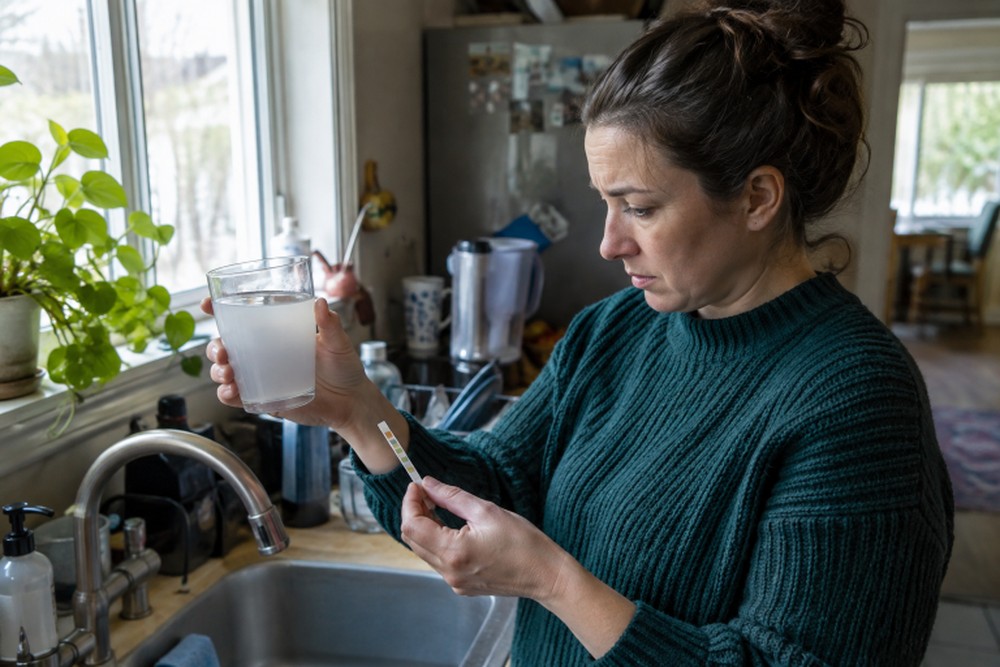
- Use a hardness strip. Test strips offer a quick estimate and can help determine whether further testing is worthwhile.
- Use a drop-count kit. These kits can provide a more specific hardness reading than basic strips.
- Choose lab testing when needed. Certified laboratory testing is the stronger option for bacteria, nitrates, metals, and other concerns that should not be guessed from visible symptoms.
What a Water Hardness Number Means
Hardness may appear as parts per million, milligrams per liter, or grains per gallon. Confirm the unit before comparing results. In general, a higher reading means more dissolved calcium and magnesium.
- Soft: Less than 1 grain per gallon, with few scale concerns.
- Slightly hard: About 1 to 3.5 grains per gallon, where minor spotting may appear.
- Moderately hard: About 3.5 to 7 grains per gallon, often with more noticeable soap and scale effects.
- Hard: About 7 to 10.5 grains per gallon, where fixture and appliance buildup can become more frequent.
- Very hard: More than 10.5 grains per gallon, often associated with heavier scale and cleaning challenges.
When a Water Softener May Make Sense
A water softener is designed primarily to reduce hardness minerals. It may be a sensible whole-home option when testing confirms hardness, and the household regularly deals with scale, soap scum, stiff laundry, or mineral buildup in water-using appliances. In conventional ion-exchange softening, resin exchanges hardness minerals for sodium or potassium ions. Homeowners who want a quick technical overview can review water softening basics before discussing system options.
When Another Treatment May Be Better
- Carbon filtration may help address chlorine-related taste and odor.
- Iron treatment may be appropriate when testing connects staining to iron.
- Sediment filtration can help protect plumbing fixtures and downstream filters from grit or suspended particles.
- Reverse osmosis may be considered for targeted drinking-water treatment at a kitchen tap.
- Ultraviolet treatment may be part of a properly designed response to certain private-well microbial concerns.
Questions To Ask Before Choosing a System
- What specific issue does this system address, and what test result supports it?
- Will it treat the entire home or only one drinking-water tap?
- What space, drain connection, electrical access, salt, filters, or replacement media will it require?
- How much water does it use during regeneration or cleaning cycles?
- What are the expected annual costs for supplies, service, repairs, and replacement parts?
- Does the equipment have certification for the performance claim being discussed?
Make the Final Decision Based on Evidence
List the symptoms, identify the water source, test for the most likely concerns, and compare systems by total ownership cost rather than purchase price alone. Retest after installation when practical to confirm that the equipment is addressing the original issue. For Naperville homeowners, that measured approach can prevent unnecessary purchases and lead to treatment that fits the home, the water, and the household’s daily routine.