Biology programs teach students about different scientific branches related to biology, and they provide opportunities for attendees to develop critical thinking and problem-solving skills. In these programs, students can focus on ecological and evolutionary studies to learn more about resource management. Here is more information on the impact of a biology degree program on environmental conservation:
Ecological Principles Background
A biology degree program provides foundational information about ecological principles and how to apply ecosystem ecology. Students also learn about population and community ecology. Courses offer information about how ecological concepts have a global impact and the factors that impact organism numbers and distribution, which can inform conservation efforts. In these courses, students also have the opportunity to study local ecosystems; these include prairies and forests.
Plant and Animal Behavior Knowledge
In university biology programs, students learn about plant and animal ecology and how to study it. This provides a foundation for environmental conservation studies, and it allows students to study ecological concepts from a local community and global perspective. Students learn how to study plants from various ecological perspectives; this includes population growth and interspecific interactions as part of population and community ecology. They also learn about nutrient cycling as part of ecosystem ecology and the impact of climate change on different biome types.
Biology programs also teach animal behavior courses; this informs students about how environmental and ecological factors interact with evolutionary mechanics. This can provide a basis for learning how conservation efforts impact animal behavior. Students are also taught how to engage in field and lab research, studying parameters for behavioral studies.
Resource Management Information
Learning how to interact with complex conservation issues helps prepare students to enter the field. Biology students are able to learn more about the issues around resource management and food production on a global scale. A biology degree provides opportunities to study the ethics of food security and the inequalities around food access and distribution. A food security course provides additional perspective on complexities around resource management; this includes teaching students how to engage with topics such as:
- Biofuels
- Pest management
- Climate change
Hands-on Research and Conservation Experience
Students learn research principles that allow them to engage in the scientific discourse surrounding conservation. They have the opportunity to learn more about biostatistical information, studying how to design experiments. Biostatistics classes provide information on how statistical methods are applied to biological experiments, and students learn more about statistical analysis and how to critically read scientific journals.
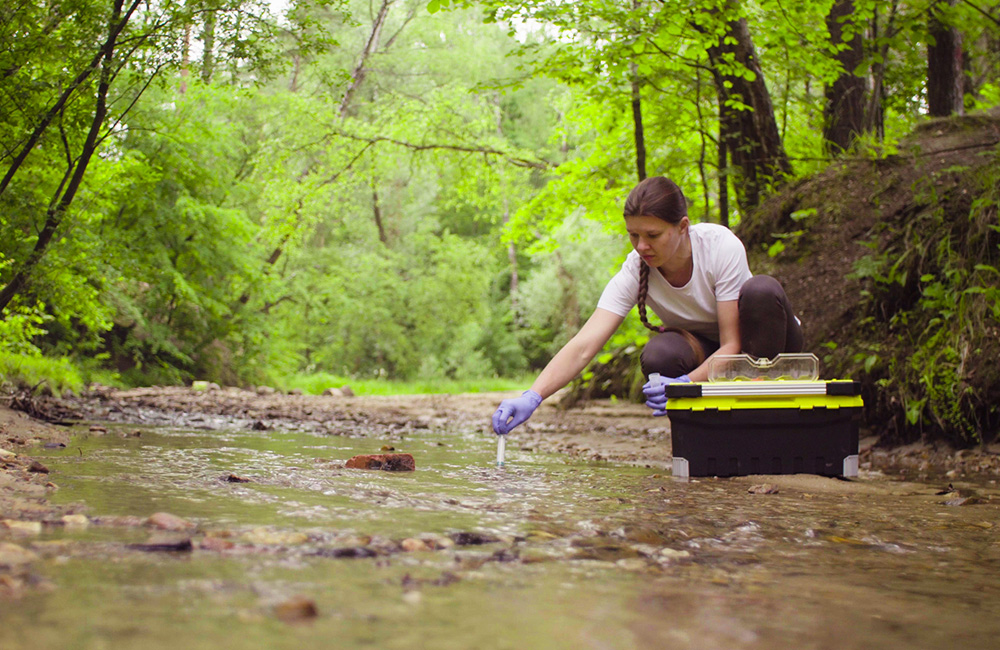
Multiple courses require laboratory hours and provide research experiences where students can design their own projects. During the process, students learn how to effectively collect information and analyze it. They are also able to practice research writing and learn how to present their collected data; this helps them engage in conservation studies and contribute to the scientific dialogue.
Hands-on research and conservation experience allow students to learn more about biodiversity and provide real-world context. Some universities provide study abroad experiences for students to study biodiversity in other countries, such as the Galapagos Islands. Students have the opportunity to compare biodiversity on different islands, and they create their own travel journals. Some universities also provide opportunities for students to intern at local zoos or wildlife departments.
Learn About a Biology Degree Program
Biology programs prepare students for careers in environmental conservation by providing practical research skills and foundational knowledge in ecology. Some universities also offer research grants for undergraduate studies, and biology and STEM clubs allow students to network with peers in the major and related sciences and study conservation. To learn more about the biology degree program, contact an accredited university today.