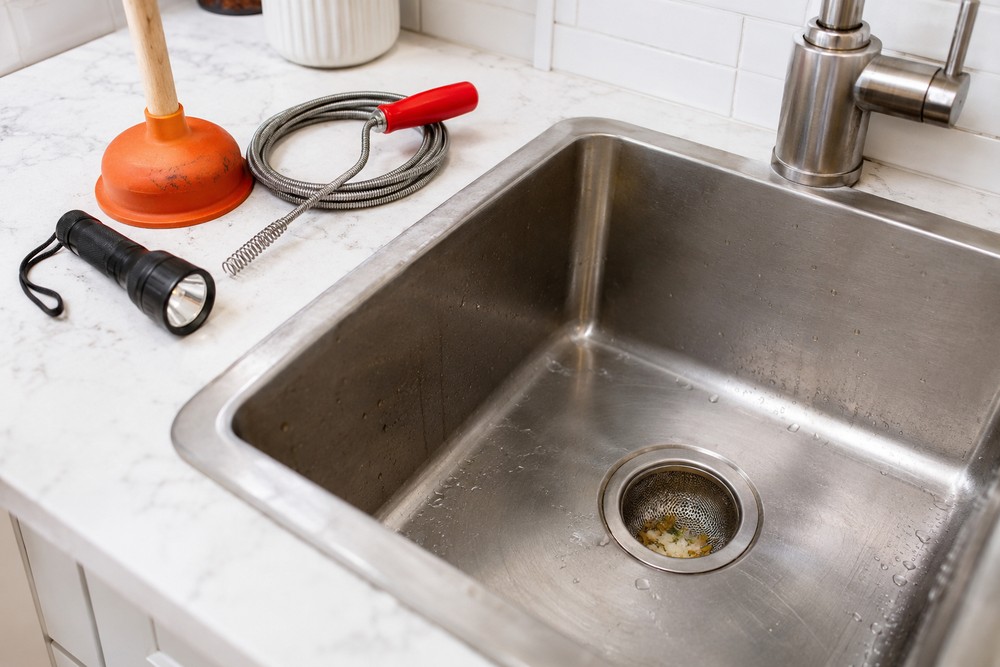
I’ve cleared the same kitchen sink four times in one summer. Same sink, same gurgle, same defeated feeling when the water finally drops. If that sounds familiar, you already know the pattern: you plunge, it drains, and three weeks later it’s back.
That loop isn’t bad luck. It’s usually a sign that you’re treating the symptom and never touching the cause. So let’s change the frame. I call it The Three-Layer Drain Method: fix the trap, inspect the line, and then change the habits that fed the clog in the first place. Skip one layer and the problem returns. Do all three and you often buy yourself years of quiet pipes.
If you’re tired of the cycle and want a licensed plumber to look at it, drain cleaning in Buena Park, CA, gives you a real inspection instead of a quick poke down the drain. But before you call anyone, it helps to understand what you’re actually dealing with.
What’s Actually Causing the Clog?
Most slow drains come from accumulation, not a single dramatic blockage. Grease, hair, soap film, and mineral deposits build up in layers along the pipe wall, narrowing the passage over months. Every so often, one more bit of debris tips it over the edge.
The water itself matters too. USDA materials have long noted that hard water carries dissolved minerals, and those minerals leave deposits behind as water sits in a drain line. Your Buena Park neighbors deal with this constantly. Pipe scale plus kitchen grease equals the stubborn slow drain that keeps limping back.
Here’s where I’ll plant a flag: if you’ve used a chemical drain cleaner more than twice in a year, you have a recurring clog problem and a pipe problem. Caustic cleaners don’t remove buildup. They punch a hole through it, and the buildup reforms around that hole faster than you think.
The Three-Layer Method, Step by Step
Work through these in order. Don’t jump to the last step because it feels like progress.
Layer one: the trap and the immediate opening
Start at the P-trap under the sink or the drain cover in the shower. Pull the hair out by hand with a cheap plastic hair tool. I keep two of them, one under each sink, because the moment you have to go looking for it is the moment you’ll decide to skip it.
If the water still drains slowly after the trap is clean, you’ve cleared layer one and confirmed the clog sits deeper. Good. You just narrowed the problem.
Layer two: the line inspection
Now it’s time to think about the pipe itself, not just the opening. A plumber with a camera can see whether the clog is grease accumulation, root intrusion in an older clay line, or a partial collapse. That matters because each one needs a different fix. A cable that clears a root problem is not the same job as a jetting service that scours the pipe wall.
If your home was built before the 1980s, this step is not optional. Older cast iron and clay lines can nick under aggressive cabling, and the difference between a cleared line and a cracked one is a technician who knows what’s in the wall.
Layer three: habit changes that starve the clog
This is the layer nobody wants to do, and it’s the one that ends the cycle. Keep a small lidded container on the counter for cooking grease and let it harden before you throw it out. Run cold water for 30 seconds after you wash dishes. Install a mesh strainer in every shower and clean it weekly. None of those are exciting. All of them work.
DIY Approach or Call a Pro?
Here’s my honest split. A sink clog that clears with a plunger and stays clear is a DIY job. A drain that backs up, drains slowly, or smells like a swamp has moved past what a plunger can touch.
| Situation | What I’d do |
|---|---|
| Single slow sink, no backup | Clear the trap, plunge, watch for a week |
| Same drain clogs twice in two months | Book a camera inspection before it backs up on a holiday |
| Multiple drains draining slowly at once | Call a plumber now; this points to your main line |
| Sewage smell or gurgling in other fixtures | Same day call, do not wait |
Multiple slow drains at once is the big one. It usually means the blockage is in the main sewer line, and that’s the scenario where waiting turns a modest repair into a yard dig. Skip the DIY pride on that one.
How to Vetting a Drain Cleaning Company
Price transparency is the first filter. Ask for a flat rate on the clearing and a separate price on any additional service, then write both down before anyone starts. A company that refuses to put a number on paper before the work begins is telling you something.
Ask whether the technician carries a camera truck or works out of a hand tool kit. Camera access is the difference between guessing and knowing. Also confirm licensing and insurance in writing. A licensed contractor is accountable to a state board if something goes wrong, and that accountability is worth real money on a job that touches your sewer line.
One more thing: ask what happens if the clog returns in two weeks. A shop that stands behind the clearing will say so out loud. That answer tells you more than any review.
Prevention That Actually Sticks
Here’s the routine I’ve settled into after too many repeat visits. Cold water after every cooking session. A strainer in every drain with a hair problem. No coffee grounds, no “flushable” wipes, and no rice down the sink. According to EPA guidance, the materials people flush are a leading cause of sewer blockages, and the fix is embarrassingly simple: keep them out.
Schedule a drain cleaning once a year if you have an older home or a busy kitchen. Prevention costs less than emergency work, every time. Hunker has solid tutorials on clearing a P-trap safely if you want a demo before you try it yourself.
The Bottom Line on Stubborn Drains
The recurring clog is almost never about the drain you can see. It’s about the buildup, the pipe, and the habits feeding both. Fix all three layers and the loop breaks. Fix one and you’ll be standing over that sink again in six weeks, plunger in hand, wondering what you missed.
So the next time the water stalls, ask yourself which layer you’ve actually skipped. And if the answer is the one that needs a camera, call someone licensed and get it looked at before the holiday guests arrive.