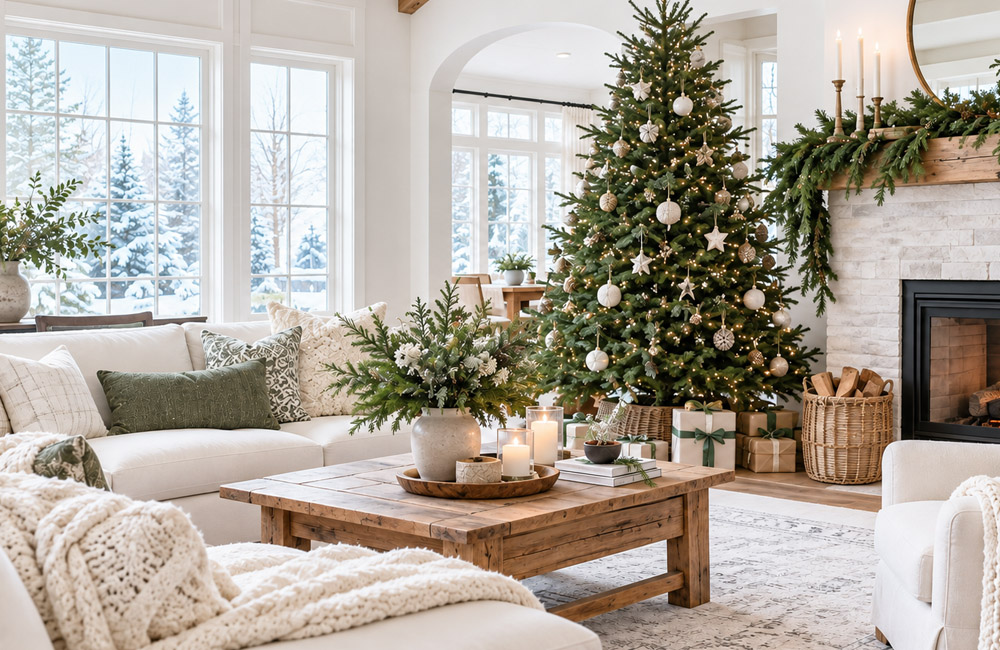
The holiday home that feels welcoming doesn’t have to be overloaded with decorations everywhere. In fact, the coziest interiors can be achieved with the help of several thoughtfully selected layers and warm lighting that allows you to create your own warmth. The most important part comes down to finding the Christmas decor that would be suitable for the atmosphere you want to create instead of just a decoration that reminds you of Christmas.
Treat seasonal decoration as an extension of your home. Choose functional furniture, provide a clear passage through a busy room, and allow important objects to remain seen. A well-chosen color scheme, natural materials, and meaningful accents can give a touch of “welcome” to any space.
Why Calm Holiday Decor Works
Festive does not necessarily mean congested. The use of a toning-down technique allows every corner of your home to shine, be it a garland hanging on the mantelpiece, an assortment of ornaments displayed on the coffee table, or a wreath hanging at the entrance. This also makes things much simpler in day-to-day life since tables, countertops, doors, and corridors can all be used as intended.
Rather than trying to overdecorate your home, select a few major elements to focus on. For example, you can have one table setting, one decoration for your tree, and one decoration for your entryway. Using one main design element throughout your decor can make holiday decorating occasions feel organized.
Choose a Simple Style Direction
Before unpacking bins or shopping, select one broad mood for the season. This decision makes it easier to edit what you own and avoid bringing home decorations that compete with one another.
- Natural and woodland-inspired: evergreen, pinecones, wood, dried citrus, and soft brown tones.
- Classic and nostalgic: red ribbon, traditional ornaments, heirloom dishes, and familiar holiday motifs.
- Soft and neutral: cream, warm white, muted metallics, linen, and simple greenery.
- Colorful and playful: bright ornaments, patterned textiles, and cheerful handmade details.
- Rustic and timeworn: weathered wood, vintage finds, brass, wool, and muted seasonal colors.
Use one main style and one supporting note. For example, a neutral room can include nostalgic ornaments, while a traditional red-and-green scheme can be softened with natural wood and woven baskets.
Build a Flexible Color Plan
A simple color plan connects separate rooms without making the whole house look identical. Choose one main color family, one supporting shade, and one quiet neutral. Then repeat them in at least three places through ribbons, pillows, napkins, ornaments, or small tabletop accents.
- Evergreen, warm white, and natural wood feel grounded and relaxed.
- Burgundy, cream, and brass create a traditional, welcoming look.
- Navy, soft gray, and silver offer a cooler, more tailored mood.
The neutral is important because it gives the eye a place to rest. It may be the existing color of your walls, upholstery, wood furniture, or everyday dishes.
Layer Texture Before Adding More Decor
What adds a tactile quality yet does not require much visual clutter? Use a knit throw to drape your couch. Use a basket made of thickly woven natural materials to hold plants and put nice ceramic pieces next to the tray made of wood. To bring variety to the room, feel free to use wool, linen, glass, metal, tree branches, rugs, and dried plants.
Contrast gives the look greater depth. For example, shiny decoration looks better when placed next to a mat or you can use a basic candleholder made of metal and contrasting material such as bark. Choose these simpler layers before adding other decorations.
Decorate Room by Room
Entryway
Set up an uncomplicated welcome space featuring one central decorative item, for example, a wreath, a small tree, or a bowl full of ornaments, on a console table. Incorporate a small seasonal piece into the space but ensure that there’s also enough room for keys, bags, coats, and walking without obstruction.
Living Room
Keep an eye on the mantel, coffee table, shelves, and seating arrangement. Use one element again such as plants, ribbon or light from candles. Place smaller items together on a tray to create a single display.
Dining Room and Kitchen
Having table decorations that are low enough so that guests can see each other when sitting at the dinner table. Using cloth napkins, a narrow cloth running from end to end, branches, and strategically placed candles can create a special atmospheric set up while leaving room for food. In the kitchen, smart little touches like seasonal fruit in a bowl or a wreath on the interior door can make a great impact.
Bedroom and Outdoor Areas
When decorating bedrooms, it is best to go for the quieter side: a seasonal throw, soft linens, a small wreath, or a warm light next to the bed. For the outdoor area, it is best to pick weatherproof planters, lanterns, and secured door decorations. Remember to check all the items after wind, rain, or snow.
Use Lighting to Set the Mood
Light the space in layers. Use general room lighting for visibility purposes, task lighting for cooking or dining needs, and accent lighting around shelving, mantels and entry tables. Candles that run on batteries or string lights are also useful when outlets are inconvenient.
Test out lights prior to hanging them, avoid pinching cords underneath rugs or furniture and make sure to keep items that produce heat away from textiles and greenery.
Add Personal and Nostalgic Details
Family ornaments, handcrafted decorations, family heirlooms, souvenirs from travels, as well as old photographs, can create a memorable space. These things do not have to match perfectly, but rather share a certain meaning, color, material, or a common place in the display.
Create a special home for sentimental items. One can use a small tray, a shelf, a glass cloche, or a tabletop display. Keep in mind that fragile things should be placed in the upper shelves or less accessible rooms if children and pets live in the house.
Avoid Common Decorating Mistakes
- Take out one or two items when the surface makes the space look overcrowded.
- Stop mixing colors that do not come from your original palette.
- Keep the windows, entries and pathways clear.
- Use lower table centerpieces during the dinner or food service.
- Keep delicate items out of the high-traffic areas in the home.
- Combine large and small pieces instead of having everything in one size.
- Think about storage plans ahead of time before putting in big or fragile decorations.
Conclusion
A cozy vacation house is a result of careful use of building materials without excessive embellishment. A mix of simple design with suitable colors and materials, multiple sources of lighting, and important personal details is a perfect way of achieving the right conditions for the holiday season. Remember that the exhibits should have a purpose, but the home has to be safe and comfortable.