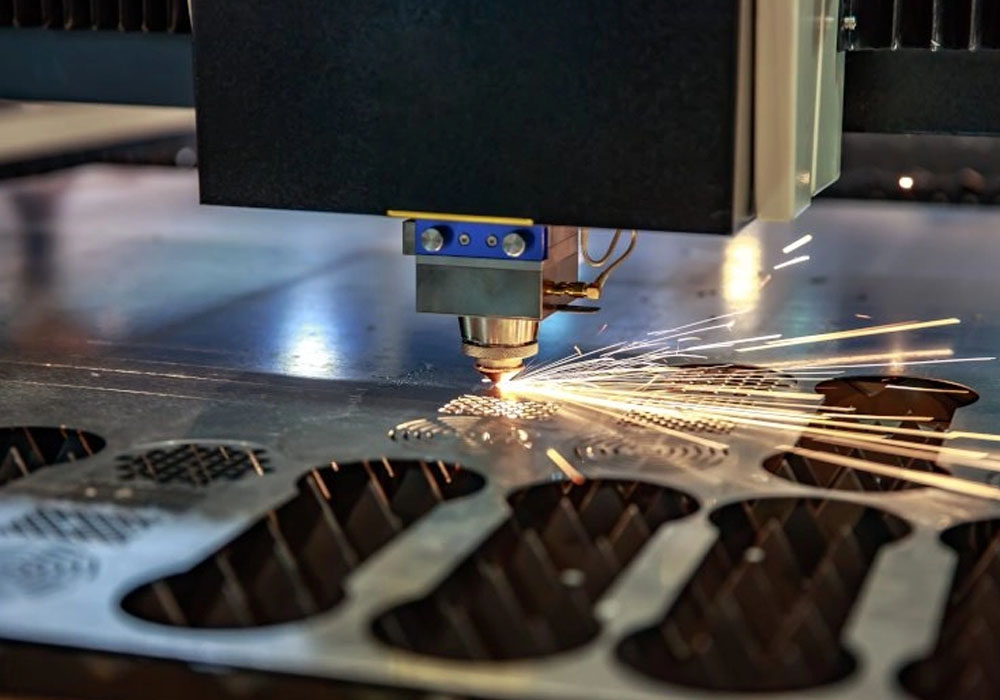
Steel doesn’t cut itself straight just because a laser is involved. Precision comes from a stack of small decisions made before the beam ever touches metal. A fiber laser can hold tolerances as tight as ±0.1 mm on mild steel, but only when power, speed, and gas pressure are dialed in together. Get one wrong and the part drifts out of spec. This is where industrial-grade steel laser cutting services earn their keep, because consistency across hundreds of parts is the real test, not one clean demo cut.
What Determines Precision in Steel Laser Cutting?
Precision comes down to five things working together: laser power, cutting speed, kerf width, heat-affected zone, and machine calibration. Miss one and the whole cut suffers. Kerf, the strip of steel the beam actually burns away, usually runs between 0.1 mm and 0.4 mm depending on plate thickness and focus. A shop that doesn’t compensate for kerf in its CAD files will hand you parts that are systematically too small or too large. That’s not a machine problem. That’s a setup problem.
How Does Material Thickness Change Cutting Accuracy?
Thicker steel means looser tolerance, every time. On plate up to 25 mm, allowable deviation stretches from roughly ±0.075 mm to ±3.25 mm as gauge increases. Heat spreads further into thick steel before the beam finishes its pass, and that spread widens the kerf and adds a slight taper to the edge. Thin sheet under 3 mm can hold tolerances near ±0.05 mm on a well-calibrated fiber machine. Anyone asking for ±0.01 mm on a 15 mm plate is asking for something physics won’t give them without a second finishing pass.
Why Does the Heat-Affected Zone Matter So Much?
The heat-affected zone is the ring of steel around the cut that gets hot enough to change its microstructure without melting. It’s small, often under a millimeter, but it changes hardness and can leave micro-burrs on thin sheet. Fiber lasers keep this zone tighter than CO2 lasers because the beam focuses to a smaller spot and moves faster through the material. For parts headed into structural welds or precision steel laser cutting solutions that require a flush fit, a narrow HAZ is not optional.
Fiber vs CO2: Which Laser Actually Cuts Steel Better?
Fiber wins on steel, full stop. CO2 lasers top out efficiently around 12 mm on stainless steel, while fiber machines push past 25 mm and do it with less energy per cut. Fiber lasers convert electricity to beam output far more efficiently, which is why running costs sit lower even though the equipment itself carries a higher upfront price. For a shop cutting steel daily, fiber is the only sensible long-term call.
Factor Snapshot
| Factor | Effect on Precision |
| Laser power | Too low leaves dross; too high widens kerf |
| Cutting speed | Too fast sacrifices edge quality; too slow adds heat |
| Kerf width | 0.1–0.4 mm removed per pass, must be compensated in CAD |
| Plate thickness | Directly loosens achievable tolerance |
| Machine calibration | Worn optics or misalignment shift accuracy fast |
How Much Does Tolerance Tightening Actually Cost?
Tighter tolerance costs real money, not a little. Pushing from a standard ±0.1 mm spec down to ±0.01 mm can inflate production cost by 300% to 500%, because it demands slower feed rates and full CMM inspection on every part. That’s why a competent fabricator only applies tight tolerance to functional mating surfaces, not the whole drawing. Blanket precision is a budget mistake dressed up as quality control.
What Should You Check Before Choosing a Laser Cutting Partner?
Ask for their actual tolerance chart, not a marketing claim. A shop should be able to state what tolerance they hold at your specific plate thickness, not a generic “high precision” answer. Ask how they compensate for kerf in nesting software. Ask what their HAZ looks like on your material. If they can’t answer with numbers, they’re guessing, and steel doesn’t forgive guesswork.