There is a particular moment during a home renovation when the project suddenly looks much bigger than expected. Cabinets are coming out, drywall is being removed, flooring is being pulled up, and piles of debris begin taking over the garage or driveway. That is often when homeowners realize they need a dumpster or disposal bin—but then another question appears: What size should they rent?
It is easy to default to the smallest option to save money or choose the largest bin simply to avoid running out of space. Neither approach is always practical. For renovations covering one or two rooms, there is often a useful middle ground that provides enough capacity without occupying more driveway space than necessary.
Understanding how to estimate the waste from a project can make the rental decision much easier.
Start With the Scope of the Renovation
The first step is to look at what is actually being removed rather than simply counting the rooms.
A bathroom renovation involving a vanity, toilet, flooring, drywall and some cabinetry will generate a very different amount of waste from a kitchen renovation involving cabinets, countertops, appliances and flooring. Likewise, replacing flooring in two bedrooms may produce considerably less debris than completely gutting those rooms.
Make a simple inventory of the materials that will leave the house:
- Drywall and plaster
- Old flooring and underlayment
- Cabinets and countertops
- Doors and trim
- Bathroom fixtures
- Broken tile
- Wood framing
- Packaging and miscellaneous renovation waste
Once you know what is being removed, you can make a much better estimate of the volume involved.
Think in Terms of Debris Volume
For a one- to two-room renovation, homeowners should consider both the quantity and the type of debris.
Bulky but relatively lightweight materials such as drywall, cabinets, trim and flooring can take up considerable space. Heavy materials such as concrete, soil, brick and large quantities of tile create a different challenge because weight can become a limiting factor even when the bin still has physical space available.
This distinction is important when arranging a residential bin rental Ontario. The appropriate container is determined not simply by how much material you have, but also by what that material weighs and how it will be disposed of.
For example, a homeowner removing old drywall from a bedroom and bathroom may need more space than someone simply clearing furniture from those rooms. Meanwhile, a project involving large amounts of concrete may require a dedicated bin designed for heavy materials rather than a general renovation container.
The Middle Size Can Make a Big Difference
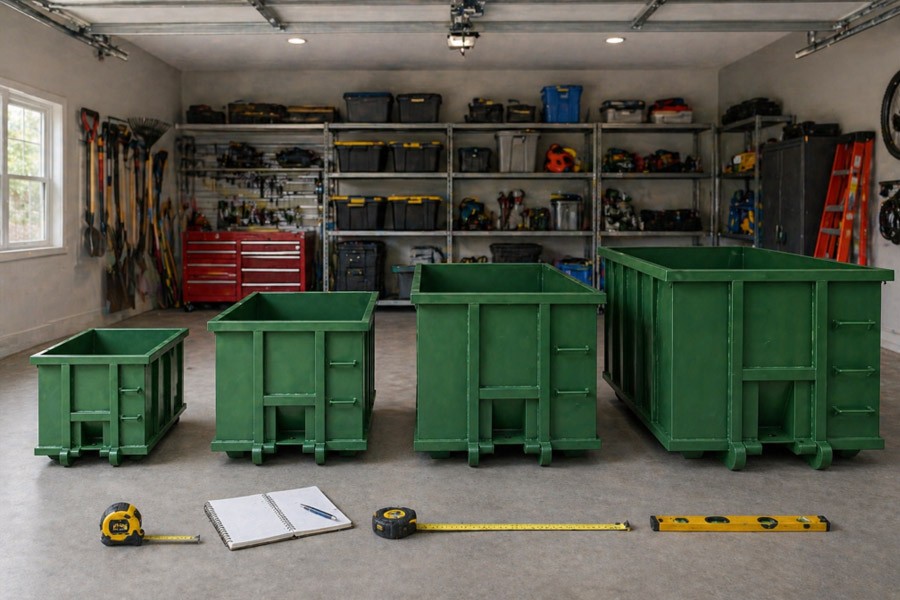
One of the most common mistakes is thinking only in terms of “small” or “large.” Many renovation projects fall somewhere between those extremes.
A small bin may work beautifully for a garage cleanout or minor repair, but it can become crowded quickly once demolition starts. That can leave homeowners with debris stacked around the property or the possibility of needing another pickup.
At the other end, choosing a very large container for a relatively contained renovation can consume more driveway space than necessary. A larger bin may also make access around the work area less convenient.
For homeowners planning a dumpster rental Burlington, or elsewhere in Southwestern Ontario, the goal should be to choose a container that provides sufficient capacity while still fitting comfortably on the property.
A Practical Guide for One or Two Rooms
As a general starting point, consider the intensity of the renovation.
A single-room cleanup or light repair may produce relatively little debris and can often be handled with a smaller container.
A one-room renovation involving demolition, such as removing kitchen cabinets, flooring and drywall, generally calls for more capacity.
A two-room renovation can move into the middle range, particularly when both rooms are being substantially stripped rather than simply redecorated.
A whole-home renovation or extensive demolition, on the other hand, is a different category altogether and may justify a significantly larger container.
These are starting points rather than fixed rules. The actual size required depends on the materials, demolition method and amount of waste generated.
Why the Right Size Matters for Your Driveway
Capacity is not the only consideration.
A dumpster is going to occupy part of your property throughout the renovation. If it is substantially larger than necessary, it can reduce the usable area of your driveway and make it harder to move vehicles, equipment or materials around the worksite.
This can become particularly inconvenient when contractors need regular access to the house or when homeowners are completing the renovation themselves and need space for tools and deliveries.
Conversely, an undersized container can create its own problems. Once debris starts piling up outside the bin, the work area becomes cluttered and additional removal may be required.
The right-sized bin therefore helps balance waste capacity with usable property space.
Consider How the Debris Will Be Loaded
Another useful way to estimate the required capacity is to think about how the renovation will progress.
Will everything be demolished at once? Or will the project take place room by room over several days?
A staged renovation gives homeowners more opportunity to monitor how quickly the container fills. A major demolition carried out over a short period may require considerably more capacity from the beginning.
It is also worth breaking down large materials whenever practical. Flattening cardboard, breaking down cabinets where appropriate and reducing bulky pieces can make better use of the available space. However, homeowners should always follow the rental company’s loading requirements and avoid placing materials above the permitted fill level.
Hersey Bins as an Ontario Example
Hersey Bins provides an example of how different project sizes can be accommodated through a range of residential and construction bin options. The company describes itself as a locally owned Ontario operation and offers bins ranging from 7 to 40 cubic yards for different types of projects.
For residential work in the one- to two-room range, Hersey Bins identifies its 10-yard bin as a popular option. Its sizing information specifically describes the 10-yard container as suitable for projects such as small kitchen or bathroom renovations and light construction debris, including jobs involving one to two rooms.
That does not mean every two-room renovation requires a 10-yard bin. Material type, demolition scope and weight still need to be considered. Rather, it illustrates why homeowners should look beyond the smallest and largest choices and consider the intermediate sizes available.
Measure the Project Before Ordering
Before arranging a bin, take a few minutes to answer these questions:
- How many rooms are being renovated?
- Are they being redecorated or substantially demolished?
- What materials are being removed?
- Are there heavy materials such as concrete, brick or soil?
- How much floor space will the discarded materials occupy?
- How much driveway space can realistically be dedicated to the bin?
- Will the renovation happen all at once or over several days?
Having these details ready makes it easier for a rental company to recommend an appropriate container.
Avoid Paying for Space You Do Not Need
Choosing a dumpster should not be a guessing game between the smallest and largest available option.
For a renovation involving one or two rooms, the better approach is to estimate the debris based on the materials being removed, consider whether weight restrictions apply, and then match that estimate to a bin that fits comfortably on the property.
A properly sized container can keep demolition waste contained, reduce unnecessary clutter and preserve more usable driveway space while the renovation is underway. It can also help homeowners avoid the inconvenience of discovering halfway through the project that their chosen bin is simply too small.
Whether you are planning a kitchen refresh, bathroom renovation, flooring replacement or another contained home improvement project, spending a few minutes thinking about volume, material type and available space can make the entire waste-removal process considerably smoother.
And when the project falls somewhere between a minor cleanup and a full-house demolition, remember that the middle ground may be exactly where the right bin size is found.