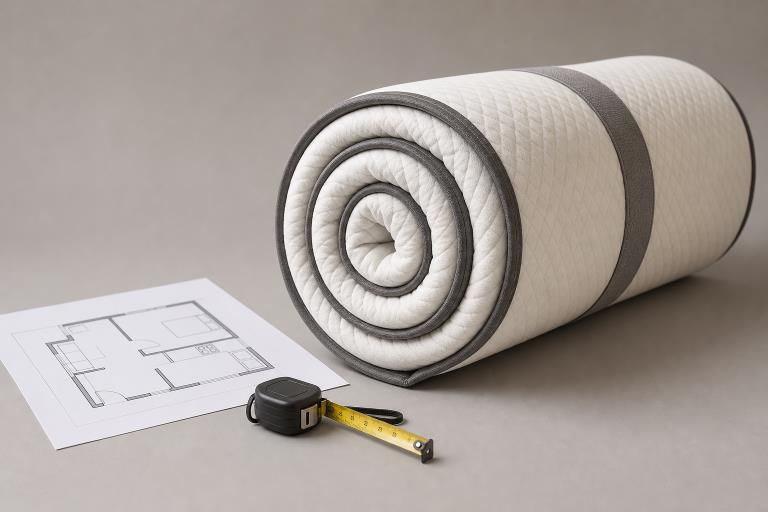
Choosing a mattress size is about more than picking the largest bed your budget allows. The best choice should fit the room, support the people who use it, and leave enough space for everyday routines. Reviewing standard mattress dimensions is a useful first step, but the complete bed setup and room layout matter just as much.
A mattress can technically fit inside a bedroom while still making it difficult to open a dresser, reach a closet, or walk around the bed. Before ordering, consider the sleeping surface, frame, headboard, furniture, door swings, and the route the mattress must take to reach the room.
Start With the Room
Your bedroom should guide the decision. Measure each wall, then note where doors, windows, closets, radiators, built-in shelving, and outlets are located. Door placement is especially important because a bed positioned too close to the swing path can make the room feel awkward from the moment you enter.
Use painter’s tape to mark the planned footprint on the floor. Include the outside dimensions of the frame, not just the mattress. Walk around the outline, stand where drawers will open, and picture making the bed. This simple test often reveals whether a larger option is truly practical.
Measure More Than Floor Space
Mattress measurements describe the sleeping surface, while a finished bed can take up more room. Platform frames, upholstered side rails, thick headboards, footboards, and storage drawers may add several inches in one or more directions. Check the exact product specifications before buying, rather than relying only on the label.
Also, measure the delivery route. Record the width of exterior doors, apartment entrances, bedroom doors, halls, stair landings, sharp turns, and elevator interiors. A mattress that fits the bedroom may still be difficult to carry into it. For a broader view of how names and dimensions vary between regions, bed size standards show why confirming the listed measurements is smarter than relying on a name alone.
Match the Bed to the Sleepers
The right amount of sleep space depends on who will use the bed now and in the future. A solo sleeper may want room to stretch out, while two adults may need enough width to change positions without constantly disturbing each other. Height matters, too. Taller people often benefit from added length, but extra length is only useful if the room can accommodate it.
Questions to Ask Before Choosing
- Will the bed be used by one person, two people, or occasional guests?
- Does either sleeper need extra legroom or more personal space?
- Do children or pets regularly share the bed?
- Does anyone move frequently during sleep?
- Will this mattress stay in the same bedroom for several years?
For example, a single adult in a compact apartment may prefer a full-size or queen-size bed for extra room, provided the layout still works. In contrast, a couple furnishing a small guest room may decide that a full-size bed creates a more functional space than a queen.
Compare Common Mattress Sizes
Common U.S. mattress categories offer different balances of width, length, and room impact. Treat these options as starting points, then verify the measurements of the specific model and frame you plan to buy.
- Twin:Usually about 38 by 75 inches. It often works well for children, bunk beds, and very compact bedrooms, but it can feel narrow for many adults.
- Twin XL:Usually about 38 by 80 inches. It adds useful legroom for taller solo sleepers and is common in dorm settings, though it does not increase width.
- Full:Usually about 54 by 75 inches. It can suit teens, solo adults, and guest rooms, but it is generally tight for two adults.
- Queen:Usually about 60 by 80 inches. It is a flexible choice for couples and solo sleepers, though it requires more clear floor space around the bed.
- King:Usually about 76 by 80 inches. It gives couples substantial personal space but can dominate a smaller bedroom.
- California king:Usually about 72 by 84 inches. It offers extra length for taller sleepers and can work nicely in a long, narrow room, but it is narrower than a standard king.
Plan for Furniture and Clearance
A comfortable bedroom needs usable paths, not just a bed that fits between walls. Leave enough space to move around the bed’s open sides, access nightstands, and fully open closet doors or dresser drawers. Consider where you will place a laundry basket, a chair, a desk, or a bench at the foot of the bed.
Keep light switches, outlets, lamps, and window coverings accessible. If a king-size setup removes all convenient walking space, a queen may be the better long-term choice. A calmer, easier-to-use room can be more valuable than a few extra inches of mattress width.
Check Frames, Sheets, and Accessories
A mattress purchase also affects the frame, foundation, sheets, protector, blankets, and adjustable base. Confirm that your existing frame matches the selected mattress category and provides the support recommended by the mattress manufacturer. A frame that is too large, too small, damaged, or poorly supported can affect comfort and durability.
Before Reusing an Existing Frame
- Measure the inside width and length of the frame.
- Inspect slats, center rails, legs, and fasteners for damage.
- Check for gaps that could allow the mattress to shift or sag.
- Confirm the frame can support the combined weight of the mattress and sleepers.
- Consider the finished bed height and whether getting in and out will feel comfortable.
Avoid Common Sizing Mistakes
- Measuring the bedroom but not the hallways, stairs, or doorways.
- Assuming all frames have the same outside dimensions.
- Forgetting that headboards and footboards add depth.
- Choosing extra length without checking the available room width.
- Buy sheets and protectors before confirming the exact size.
- Leaving too little room for doors, drawers, storage, and walking paths.
Mattress labels are helpful, but the listed dimensions of the exact product should make the final decision. A difference of only a few inches can determine whether a bed feels well planned or makes an older home, narrow apartment, or shared bedroom feel crowded.
Use a Simple Decision Process
- Measure the room.Write down wall lengths and identify usable floor space.
- Map the layout.Mark doors, windows, closets, dressers, desks, and outlets.
- Measure the route.Check every doorway, hallway, stairway, and elevator involved.
- List sleeper needs.Consider height, movement, pets, guests, and future plans.
- Compare realistic options.Weigh sleep comfort against floor space and furniture access.
- Confirm compatibility.Check the frame, support system, sheets, and accessories.
- Test the footprint.Use tape or cardboard before delivery day.
Final Checklist
- Room dimensions have been recorded.
- The complete bed footprint has been marked on the floor.
- Door, closet, and drawer clearance has been tested.
- The delivery path has been measured.
- The frame and support system are compatible.
- Sheets, protectors, and bedding match the chosen size.
- The layout leaves room for future needs.
Choosing a mattress size is easier when the whole room is part of the plan. By balancing sleep comfort with furniture placement, movement paths, delivery access, and future needs, you can select a bed that supports better rest without sacrificing functionality in the bedroom.