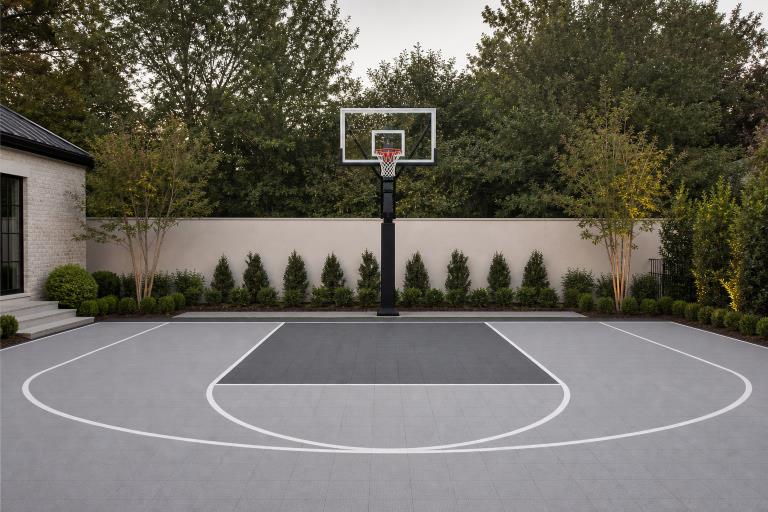
A backyard basketball court can turn unused outdoor space into a dependable place for practice, family games, and casual competition. The best projects begin with how the area will actually be used, then match the layout, surface, and in ground basketball hoops to that goal.
Planning carefully before excavation starts helps avoid common problems such as cramped run-off areas, poor drainage, difficult equipment access, and a basket positioned too close to a fence or window. A smaller, safe court that is often used is usually more valuable than an oversized design that overwhelms the yard.
Start With Playing Goals
Decide whether the space is for shooting drills, children learning the game, one-on-one matchups, or larger pickup games. Consider player ages, skill levels, and whether adjustable hoop height matters. Also, decide if the court may double as a play area, workout zone, or gathering space. These answers determine the footprint, backboard, rim, lighting, and budget.
Measure The Available Space
Measure the usable site rather than the total yard. Account for property lines, required setbacks, patios, slopes, trees, garden beds, pools, windows, roof overhangs, and overhead wires. Leave room for players to move beyond the painted boundaries and for balls to travel without immediately reaching a street, wall, or neighboring property.
Start by marking the proposed basket location. Measure outward from the backboard, mark the sidelines and likely shooting zones, then walk the outline from several angles. Check access for excavation equipment, concrete delivery, materials, and future repairs before settling on the design.
Choose A Practical Court Size
Home courts do not need professional dimensions to be useful. The NBA court dimensions provide helpful reference points, including a 94-foot-by-50-foot court, a 10-foot rim, a 72-inch-wide backboard, and an 18-inch rim. Scale the layout to fit the property and the way people will play.
- Shooting pad:Best for a driveway or narrow side yard. It supports free throws, layups, ball handling, and shooting practice.
- Compact half court:A strong fit for families, one-on-one games, drills, and small groups.
- Full court:Best for larger properties, serious training, and frequent games with multiple players.
Plan The Base And Surface
The visible court surface is only as good as the base below it. Proper excavation, grading, compacted soil, aggregate, and drainage reduce the risk of standing water, shifting, cracks, and uneven play. Concrete and asphalt are common base materials, while coatings and modular sport tiles can add traction, color, and line markings.
Direct runoff away from the house and avoid creating a low spot where water collects. Expansion joints, crack-control planning, and a consistent slope should be addressed before the finish surface is installed, not after problems appear.
Select Basketball Equipment
Evaluate equipment for long-term outdoor use, not just a single purchase. A larger backboard can improve visibility and bank-shot practice, while adjustable height helps households with players of different ages. Compare fixed and flexing rims, support-post stability, safe overhang, corrosion resistance, anchoring requirements, and the ease of replacing nets or hardware.
- Choose a backboard material suited to the expected use and weather exposure.
- Look for a securely anchored support structure with adequate clearance beneath the hoop.
- Consider a flex rim for active play and a durable outdoor net that is easy to replace.
- Do not sacrifice stability or safe placement solely to reduce the initial cost.
Build In Safety Features
Keep the area behind and beside the basket clear of hard obstacles. Protect or avoid sharp edges, use a slip-resistant surface, and position the hoop away from traffic, pool areas, walls, and breakable windows. Inspecting a court before play should become routine. The same clear-zone and hazard-checking habits emphasized in playground safety guidance can help families spot loose hardware, debris, and changing conditions around a backyard court.
Add Lighting And Ball Control
Lighting, fencing, and containment netting can make a court more usable, but they also add installation and maintenance needs. Use even, low-glare lighting aimed downward, and consider neighbors before planning operating hours. Fencing or netting is particularly helpful near roads, pools, gardens, walkways, and neighboring yards. Include dry storage for balls, cleaning supplies, and replacement parts, plus seating that sits outside active play zones.
Set A Realistic Budget
Build the budget around both visible and hidden costs. Include site design, permits, excavation, grading, drainage, base construction, surface materials, line marking, hoop equipment, electrical work, fencing, delivery, labor, cleanup, and future maintenance. Keep a contingency amount available for unexpected soil conditions, restricted access, drainage corrections, or local approval requirements.
Follow The Installation Sequence
- Confirm playing goals, size, and basket location.
- Measure the site and identify obstacles, access needs, and drainage paths.
- Check local rules before ordering materials or beginning excavation.
- Prepare and compact the base, then install concrete or asphalt as planned.
- Allow the base to cure or settle as required.
- Install the surface finish, lines, hoop system, lighting, and containment features.
- Inspect anchors, edges, drainage, and clearances before regular play.
Permanent concrete work, electrical connections, structural anchoring, and permitting may require the services of qualified local professionals.
Maintain The Court
Before each session, remove stones, branches, standing water, and loose debris. Monthly, inspect bolts, anchors, rim hardware, nets, surface damage, and fencing. Seasonally, clean the surface and verify that drainage still works as intended. After severe weather, check the hoop structure, lights, nearby trees, and netting. Annual maintenance should include reviewing line wear, corrosion, cracks, and any movement in the support system.
Common Backyard Basketball Court Questions
Is a half-court enough for family play?
For many households, yes. A half court supports shooting practice, drills, one-on-one games, and small-group play while requiring less space and investment than a full court.
Does A Backyard Basketball Court Need A Permit?
Requirements vary by location. Check with the relevant city or county before construction, especially when the project involves grading, drainage changes, lighting, fencing, impervious surfaces, or permanent structures.
Can A Small Driveway Work For Basketball?
Yes. A carefully positioned hoop and a clear shooting pad can create a useful space for casual play, skills practice, and younger players, provided the surrounding area is safe.
Conclusion
A successful backyard basketball court fits the property, supports the players who will use it, and remains safe through changing weather and regular use. Measure first, invest in the base and drainage, choose equipment thoughtfully, and leave enough room for movement and maintenance. That approach creates a court that people can enjoy for years.