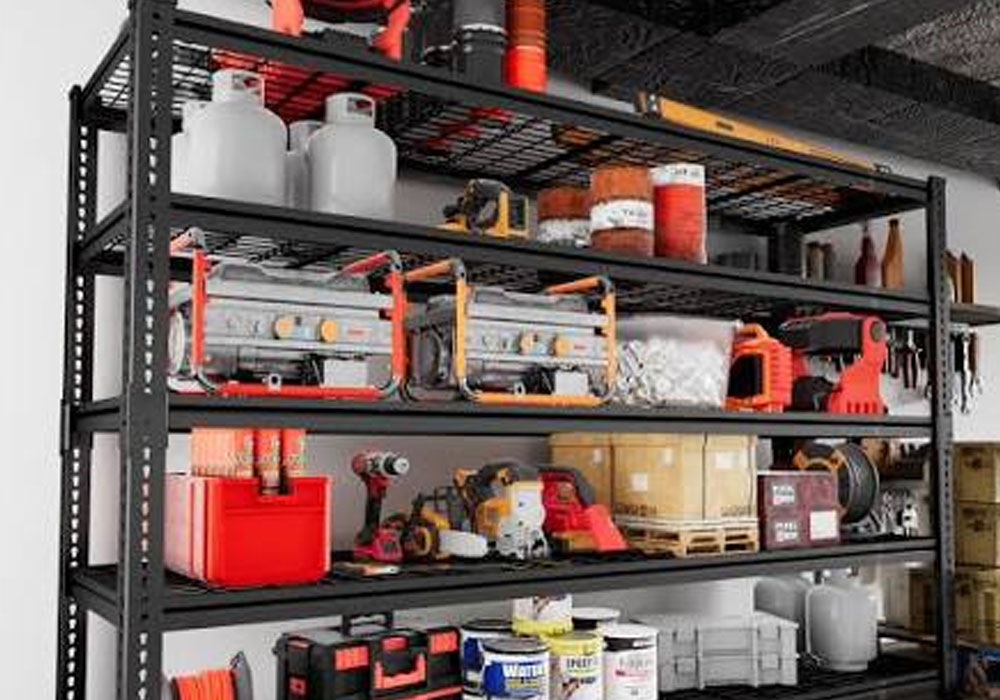
A garage full of boxes stacked on the floor is not storage, it is a hazard waiting to happen. Steel storage racking in Australia must meet AS 4084, a standard split into two parts since the 2023 update, one covering design and one covering ongoing operation and maintenance. Commercial-grade garage shelving brings that same engineered safety down to a smaller space, turning wasted floor area into organised, load-rated storage. Under AS 4084, businesses must run a formal safety inspection of racking at least once every twelve months, a rule that shows just how seriously structural storage failure is treated across the industry.
Why Standard Shelving Falls Short
Flat pack shelving from a general hardware store is built for light household items, not tools, machinery parts, or bulk stock. Commercial-grade shelving uses heavier gauge steel, welded or bolted joints, and clearly rated load limits per shelf. That difference matters the moment you store anything heavier than a few boxes of holiday decorations.
Cantilever Racking for Awkward Loads
Standard shelving struggles with long items like timber, pipe, or ladders, since there is nowhere for the length to sit safely. Cantilever racking solves this with horizontal arms extending from a central column, leaving the front completely open for loading. It is the standard solution wherever length matters more than box shape, and it keeps long items off the floor where they become a tripping hazard.
Load Ratings Are Not Optional
Every shelf or arm should carry a visible, clearly stated load rating, and that number should never get treated as a rough guide. Overloading a shelf does not always cause instant collapse, it often weakens the structure slowly until a normal load finally causes failure. Businesses and serious home users should match shelving capacity to their heaviest planned load, with some buffer room left over.
Signs Your Current Setup Needs Replacing
- Visible rust, dents, or bent frame sections anywhere on the structure.
- Missing or unreadable load capacity signage.
- Shelves that flex noticeably under normal loads.
- Units that were never properly anchored to a wall or floor.
Getting the Layout Right From the Start
Good shelving layout leaves clear walkways, keeps heavier items lower to the ground, and groups similar items together so nobody is climbing over gear to find what they need. Poor layout wastes vertical space and turns a simple task like grabbing a toolbox into an actual safety risk on a Saturday afternoon.
DIY Assembly Versus Professional Installation
Many commercial-grade units can be assembled without a specialist, provided the instructions and anchoring requirements are followed exactly. Larger systems, rack-supported structures, or anything storing genuinely heavy loads usually call for professional installation, since incorrect anchoring is one of the most common causes of racking failure. When in doubt, a quick check with the supplier before assembly is far cheaper than a collapse later.
Seismic and Environmental Factors Most People Skip
The 2023 update to AS 4084 folded in updated seismic design parameters, which matters even in areas that rarely feel an earthquake, since ground vibration from nearby traffic or heavy machinery can have a similar effect on tall racking over time. Floor condition also plays a role, as uneven or damaged concrete changes how evenly a load-bearing frame sits and distributes weight.
Why This Matters More Than People Think
Annual inspections under AS 4084 exist because racking failure is rarely sudden, it usually builds up through small, unnoticed damage over months or years. A garage or warehouse fitted with proper commercial-grade garage shelving, inspected regularly and loaded within its rated limits, turns a genuinely dangerous storage mess into a safe, organised space that actually works for daily use.