Understanding the Benefits of In-Home Senior Care
As our loved ones age, ensuring their dignity, independence, and well-being becomes a top priority. This is especially true for families in Downers Grove who are navigating the complexities of Alzheimer’s disease or other forms of dementia. Finding the right care solution can feel overwhelming.
We understand the profound impact that memory challenges have on individuals and their families. Certified memory care offers specialized support designed to meet these unique needs. It goes beyond standard assistance, focusing on safety, cognitive engagement, and maintaining quality of life.
This guide will explore the landscape of certified memory care in Downers Grove. We will delve into its specific services and programs, how it differs from other care options, and what families should consider when making critical decisions. Our aim is to provide clarity and guidance, covering everything from personalized care plans to financial assistance. For those interested in flexible, tailored solutions, exploring options like personalized in-home care services can be a valuable first step in understanding how care can be adapted to individual needs.
For many seniors and their families, the concept of “aging in place” holds immense appeal. This means allowing an individual to remain in their own home, surrounded by familiar belongings, cherished memories, and the comfort of their established routine, even as their care needs evolve. The benefits of in-home senior care, particularly for those with memory impairments, are profound and multifaceted.
One of the most significant advantages is the inherent comfort and emotional security derived from being in a familiar environment. A senior’s home is a sanctuary, a place where they have built a lifetime of experiences. For individuals with Alzheimer’s or dementia, maintaining this connection to their personal history and surroundings can significantly reduce anxiety, confusion, and disorientation. The sensory familiarity—the scent of their own home, the feel of their favorite chair, the view from their window—provides a grounding presence that is difficult to replicate in an unfamiliar institutional setting. This stability fosters a sense of peace and belonging, which is crucial for emotional well-being.
In-home care also champions daily independence. While assistance is provided, it is tailored to support rather than replace an individual’s capabilities. Caregivers work alongside seniors, encouraging them to participate in daily tasks to the extent they are able, preserving their autonomy and self-esteem. This might involve guiding them through meal preparation, assisting with dressing choices, or simply being present during a walk in their own garden. This personalized approach helps to maintain cognitive function and physical mobility for longer, contributing to a higher quality of life.
Furthermore, the presence of a dedicated caregiver in the home can significantly reduce stress for both the senior and their family. Family caregivers often face immense pressure, balancing their own lives with the demanding responsibilities of caregiving. In-home care provides much-needed respite, allowing family members to recharge, attend to other obligations, and simply enjoy quality time with their loved one without the constant burden of care tasks. This support system can prevent caregiver burnout, strengthening family bonds rather than straining them.
Finally, in-home care allows seniors to maintain their connection to their community. They can continue to visit local parks, attend religious services, interact with neighbors, and participate in familiar social activities. This continued engagement is vital for mental stimulation and preventing social isolation, which can often exacerbate memory-related symptoms. The caregiver facilitates these connections, ensuring safe transportation and support during outings, enriching the senior’s life beyond the four walls of their home.
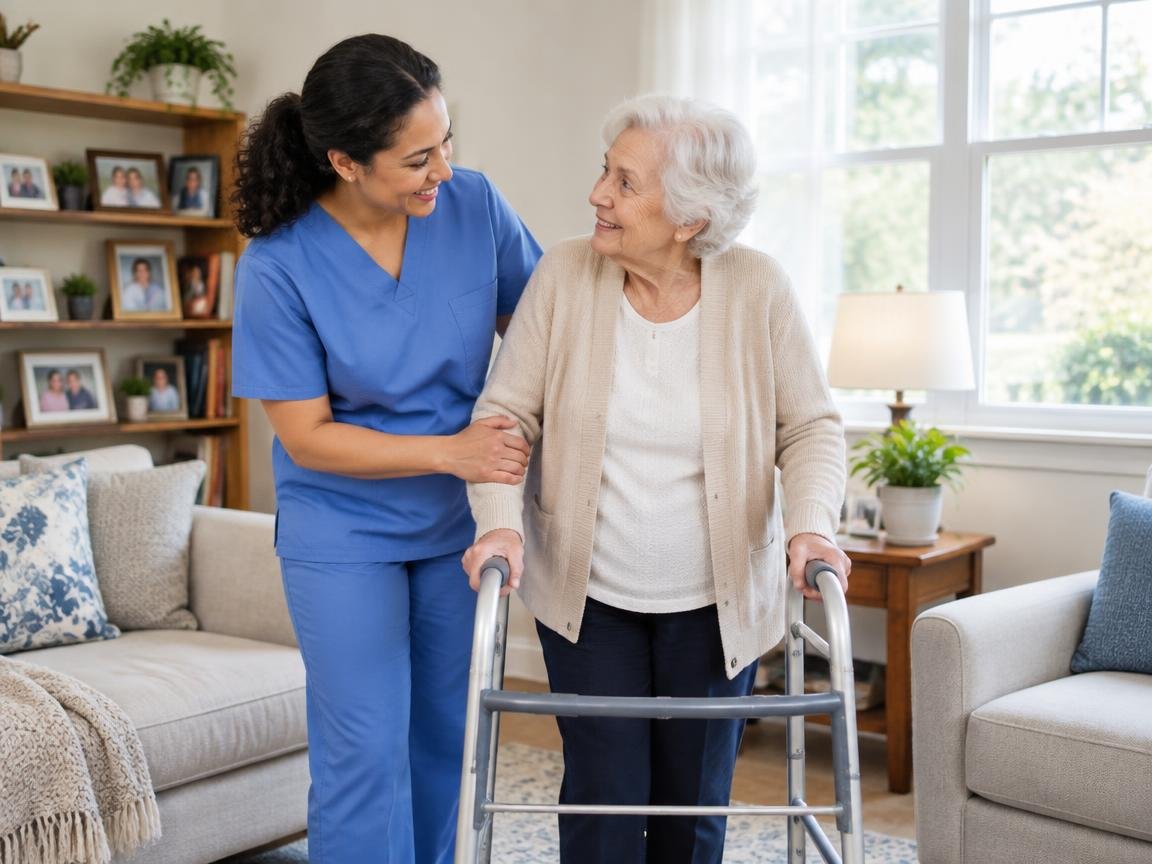
Comprehensive In-Home Assistance and Services
When considering in-home care for seniors, especially those with memory challenges, understand the breadth and depth of services available. Our goal is to provide comprehensive care plans that uphold personal dignity and promote overall well-being. These plans are highly customizable, adapting to the unique needs and preferences of each individual.
Beyond basic companionship, in-home care services can encompass a wide array of support functions. This often includes practical assistance with daily household tasks such as meal preparation, ensuring nutritious and enjoyable meals are consistently available. Light housekeeping helps maintain a clean and comfortable living environment, contributing to both physical health and mental clarity. Medication reminders are a critical component, helping seniors adhere to prescribed schedules and dosages, which is vital for managing chronic conditions and preventing health complications.
Respite care is another invaluable service, offering temporary relief for primary family caregivers. This allows family members to take breaks, knowing their loved one is in capable and compassionate hands. Mobility support, which can range from assistance with walking and transferring to fall prevention strategies, ensures seniors can move safely within their home and community. These services are delivered with respect and empathy, focusing on empowering seniors while providing the necessary support.
Personal Assistance and Daily Living Support
The core of in-home senior care often revolves around personal assistance and support for activities of daily living (ADLs). These are the fundamental tasks individuals perform daily for self-care. Our caregivers are trained to provide sensitive and respectful assistance with:
- Hygiene Care: This includes help with bathing, showering, and maintaining personal cleanliness, always prioritizing comfort and privacy.
- Dressing Assistance: Caregivers can help seniors choose appropriate clothing, dress, and undress, making the process easier and more dignified.
- Grooming: Support with hair care, oral hygiene, and other personal grooming tasks helps seniors maintain their appearance and self-esteem.
- Nutritional Support: Beyond meal preparation, this involves assisting with feeding if needed, ensuring adequate hydration, and monitoring dietary intake to meet specific health requirements.
- Errand Services: Caregivers can run errands such as grocery shopping, picking up prescriptions, or handling other necessary tasks, allowing seniors to remain at home.
- Companionship: Perhaps one of the most underestimated services, companionship involves engaging in conversation, playing games, reading aloud, or simply being a supportive presence, combating loneliness and fostering mental engagement.
- Physical Safety: This includes supervising activities, assisting with transfers, and ensuring the home environment is free from hazards to prevent falls and injuries.
Specialized Dementia Support in In-Home Senior Care
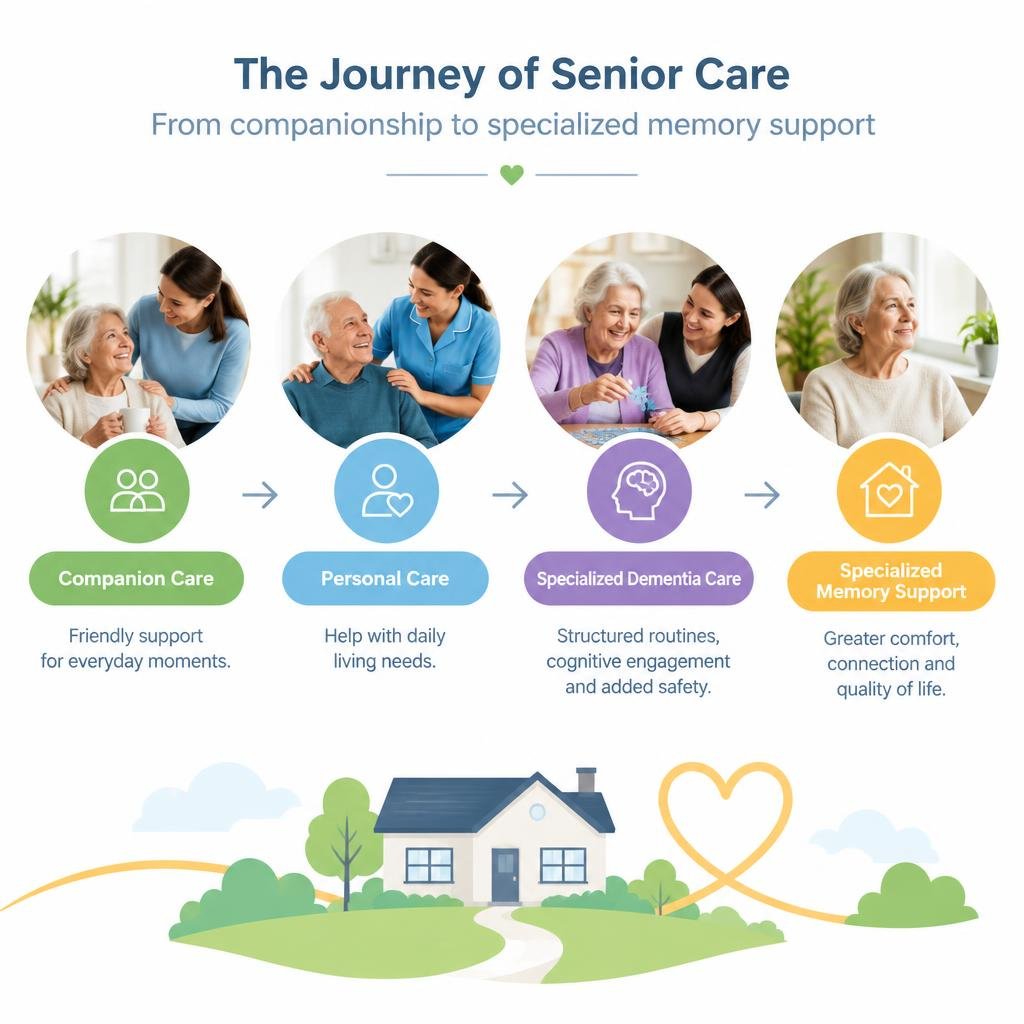
For individuals living with Alzheimer’s disease or other forms of dementia, in-home care takes on a specialized dimension. Our caregivers receive specific training to understand the unique challenges and needs associated with cognitive decline. This specialized support focuses on creating a safe, stimulating, and predictable environment that minimizes confusion and maximizes comfort. Key aspects include:
- Cognitive Stimulation: Caregivers engage residents in activities designed to stimulate memory and cognitive function, such as reminiscence therapy, familiar puzzles, board games, reading, or listening to music from their past. These activities are tailored to the individual’s current abilities and preferences.
- Wandering Prevention: For those prone to wandering, caregivers implement strategies to ensure safety within the home, such as securing exits, monitoring movement, and engaging the individual in purposeful activities to redirect their attention.
- Behavioral Management: Dementia can sometimes lead to challenging behaviors. Caregivers are trained to identify triggers, respond with patience and empathy, and use techniques to de-escalate situations, promoting a calm and positive environment.
- Sensory Engagement: Activities that engage the senses—such as aromatherapy, tactile objects, or gentle music—can be particularly soothing and beneficial for individuals with dementia, helping to evoke positive memories and reduce agitation.
- Communication Techniques: Specialized training focuses on effective communication strategies for individuals with memory loss, including using clear, simple language, maintaining eye contact, active listening, and understanding non-verbal cues. This helps to reduce frustration and foster connection.
These specialized services are designed to provide comprehensive, compassionate care that addresses the evolving needs of individuals with memory impairment, allowing them to remain in the comfort and familiarity of their own homes for as long as possible.
Comparing In-Home Care with Dedicated Memory Care Facilities
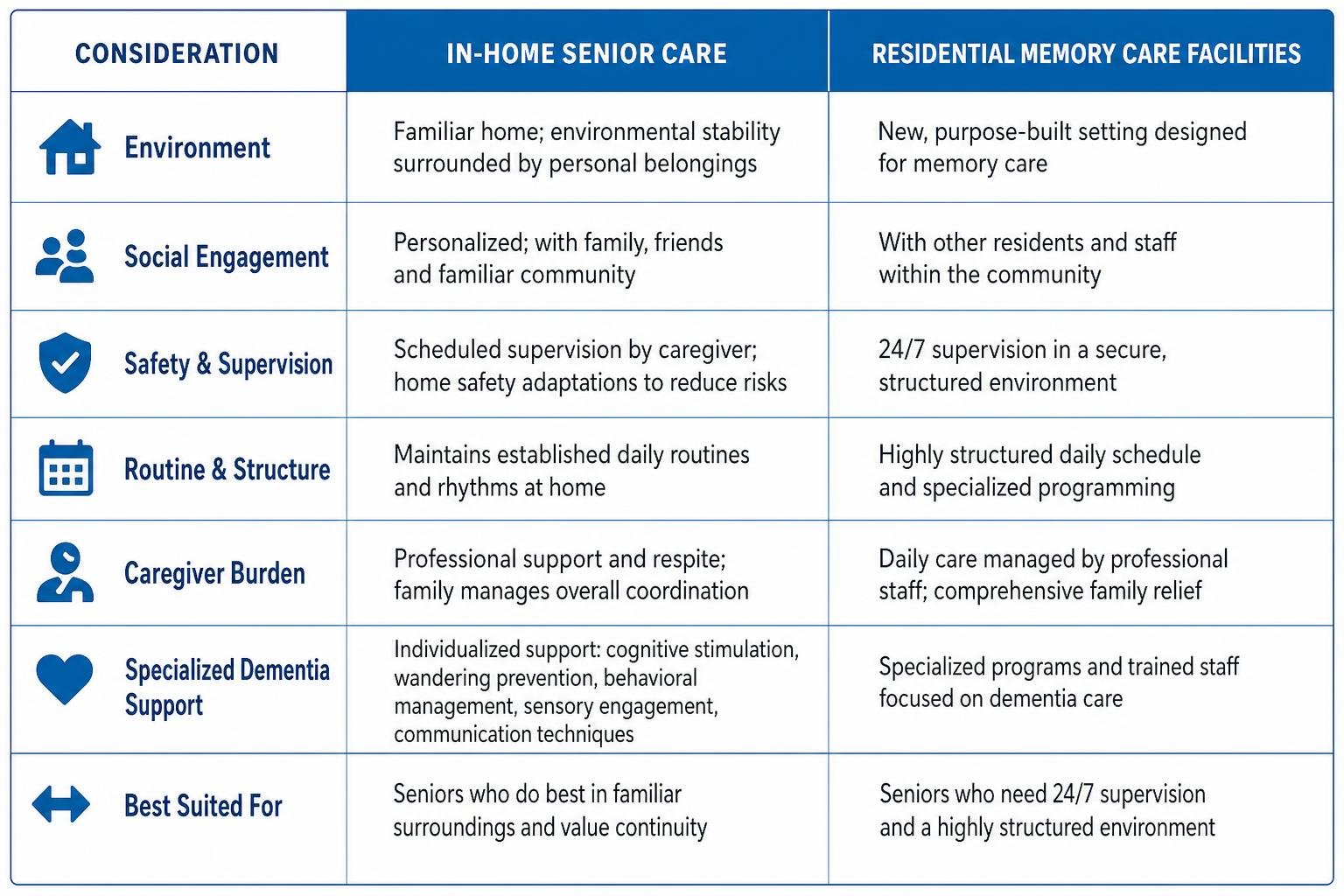
Choosing the right care setting for a loved one with memory impairment is one of the most significant decisions a family can make. Both in-home care and dedicated memory care facilities offer distinct advantages, and understanding these differences is crucial for making an informed choice. Our aim is to provide an objective comparison, recognizing that the “best” option is always the one that most closely aligns with the individual’s needs, preferences, and family circumstances.
In-home care prioritizes environmental stability and the comfort of familiar surroundings. For many, staying in their own home, surrounded by personal belongings and a lifetime of memories, can significantly reduce anxiety and disorientation often associated with cognitive decline. This continuity can help maintain a sense of identity and routine. Social engagement in an in-home setting is often more personalized, allowing the senior to interact with their chosen circle of friends and family, and participate in community activities they’ve always enjoyed, with the support of a caregiver.
Dedicated memory care facilities, on the other hand, offer a highly structured and secure environment specifically designed for individuals with advanced dementia. They typically provide 24/7 supervision, specialized programming, and a staff-to-resident ratio that ensures constant oversight. While this can offer peace of mind regarding safety and specialized medical attention, it involves a transition to a new environment, which can be challenging for some individuals. The level of social engagement in a facility is typically with other residents and staff, which can be beneficial for some but less personalized than familiar community interactions.
Caregiver burnout is a significant concern for families providing full-time care. In-home care can alleviate this by providing professional support and respite, but the primary family caregiver still often manages the overall coordination. In a facility, the burden of daily care is fully shifted to the professional staff, offering comprehensive relief to families. The supervision level in a facility is continuous and often clinical, whereas in-home care provides scheduled supervision tailored to the agreed-upon hours.
Safety, Routine, and Environmental Adaptations
Safety is paramount for individuals with memory impairment, regardless of the care setting. In-home care focuses on adapting the existing environment to mitigate risks. This includes comprehensive fall prevention strategies, such as removing tripping hazards, installing grab bars, improving lighting, and ensuring clear pathways. Home safety assessments are crucial to identify and address potential dangers, from kitchen appliances to bathroom fixtures.
Maintaining routine consistency is incredibly beneficial for individuals with dementia. In-home care allows for the preservation of established daily rhythms—waking, eating, activities, and sleeping—which can reduce disorientation and anxiety. Caregivers work to integrate care tasks seamlessly into the senior’s existing schedule, providing a predictable and comforting structure. Visual cues, such as labels on drawers or pictures indicating activities, can be strategically placed to aid memory and promote independence. Assistive technology, ranging from simple reminder clocks to more advanced monitoring systems, can further enhance safety and support cognitive function within the home.
While a dedicated memory care facility is purpose-built with safety features like secure perimeters and specialized alarm systems, in-home care leverages the familiarity of the senior’s own space to create a secure and adapted environment. The key is proactive planning and ongoing adjustments to the home as needs change.
Cost Factors and Long-Term Planning
Understanding the cost of certified memory care, whether in-home or in a facility, is a critical aspect of long-term planning. It’s important to recognize that pricing structures can vary significantly based on the level of assistance required, the number of scheduled hours, the care schedule (e.g., overnight, weekend), and whether specialized memory care or transportation support is needed.
For in-home care, costs are typically based on hourly rates, which can fluctuate depending on the specific services provided and the caregiver’s qualifications. Families might choose a few hours a day, several days a week, or more extensive live-in care. The total monthly expenses will therefore depend directly on the frequency and intensity of care. It’s essential to discuss these variables transparently with providers to understand the full scope of potential costs.
Dedicated memory care facilities, conversely, often charge a comprehensive monthly fee. This fee typically covers accommodation, meals, personal care, activities, and a certain level of medical oversight. Additional services, such as specialized therapies or higher levels of medical intervention, might incur extra charges.
When considering financial planning, families should explore various avenues. Long-term care insurance policies, if purchased in advance, can significantly offset the costs of both in-home and facility-based memory care. Veterans’ benefits, such as Aid and Attendance, may also be available for eligible individuals. It’s advisable to consult with financial advisors specializing in elder care to understand all available options and develop a sustainable budget management plan. Respite solutions, whether through in-home care or short-term stays in facilities, also have associated costs that should be factored into the overall financial strategy.
While we cannot provide specific numerical ranges for costs, we emphasize the importance of transparent discussions with any care provider to understand their pricing model and what is included in their services. A personalized assessment can help determine the specific care needs and associated costs, allowing families to plan effectively for the long term.
Developing Person-Centered Care Strategies
At the heart of effective memory care, especially in an in-home setting, lies the philosophy of person-centered care. This approach recognizes that each individual is unique, with a rich life history, distinct preferences, and evolving needs. It moves beyond a one-size-fits-all model, focusing instead on tailoring care to honor the individual’s identity, promote their strengths, and support their holistic well-being.
Developing these strategies requires close family collaboration. Families possess invaluable insights into their loved one’s past, their likes and dislikes, their routines, and what brings them comfort or distress. This information forms the foundation of a truly personalized care plan. Regular and open communication between caregivers, the senior, and family members is essential for an ongoing, dynamic assessment of needs. Care plans are not static documents; they are living guides that adapt as the individual’s condition changes.
The focus extends beyond just physical care to encompass life history integration. Understanding a senior’s career, hobbies, significant relationships, and cultural background allows caregivers to design meaningful activities and interactions. For example, a former musician might benefit from listening to or playing music, while someone who enjoyed gardening might find joy in tending to indoor plants. This holistic wellness approach addresses not only physical health but also cognitive, emotional, and spiritual needs. Emotional support is woven into every interaction, fostering a sense of security, validation, and companionship.
Customizing In-Home Senior Care for Changing Needs
The journey of memory impairment is often characterized by gradual changes, making flexibility and adaptability crucial in care provision. Our approach to in-home senior care is designed to be highly responsive to these evolving needs.
Care plans undergo periodic reviews, typically every 90 days, or more frequently if significant changes occur. These reviews involve a comprehensive reassessment of the senior’s physical health, cognitive status, and emotional well-being. Caregivers, in collaboration with family members and healthcare professionals, adjust the care plan to reflect current abilities and challenges.
Cognitive monitoring is an ongoing process, where caregivers observe and document changes in memory, judgment, and communication. This informal assessment, coupled with any formal medical evaluations, helps inform adaptive routines. For instance, if a senior begins to struggle with complex tasks, activities can be simplified, or assistance increased. Health tracking includes monitoring vital signs, medication adherence, and any new symptoms, ensuring prompt communication with medical providers.
Adaptive routines are implemented to maintain a sense of normalcy and reduce frustration. This might involve adjusting the timing of activities, breaking down tasks into smaller steps, or introducing new aids. Consistent family communication is paramount throughout this process. Regular updates, discussions about observations, and shared decision-making ensure that the care plan remains aligned with the senior’s best interests and the family’s wishes. Safety adjustments, such as modifying the home environment or introducing new assistive devices, are made proactively to prevent accidents and maintain a secure living space. This continuous cycle of assessment, adaptation, and communication ensures that the care provided remains effective, compassionate, and truly person-centered.
Frequently Asked Questions About Senior In-Home Support
Families often have many questions when considering in-home support for a loved one with memory challenges. Here, we address some of the most common inquiries to provide clarity and guidance.
How does specialized memory support at home differ from standard companion care?
While both specialized memory support and standard companion care aim to enhance a senior’s quality of life, their focus and the training required for caregivers differ significantly. Standard companion care primarily involves providing companionship, assisting with light household tasks, running errands, and ensuring general safety. It’s ideal for seniors who are largely independent but benefit from social interaction and some practical help.
Specialized memory support, however, is specifically designed for individuals with Alzheimer’s disease or other forms of dementia. Caregivers in this role undergo specific dementia training that equips them with a deep understanding of cognitive decline, its progression, and its impact on behavior and communication. This training enables them to provide targeted cognitive engagement activities, such as reminiscence therapy, memory games, and sensory stimulation, which are tailored to the individual’s cognitive level.
Furthermore, these caregivers are skilled in behavioral redirection techniques, understanding how to respond to and de-escalate agitation, confusion, or repetitive behaviors with patience and empathy. They implement strategies for wandering management, ensuring the senior’s safety within the home and preventing elopement. Crucially, they are experts in communication strategies adapted for memory loss, using clear, simple language, non-verbal cues, and active listening to foster connection and reduce frustration. While companion care offers general assistance, specialized memory support provides a nuanced, therapeutic approach to managing the complex needs of dementia.
When should families consider transitioning from home care to a memory care community?
The decision to transition a loved one from in-home care to a dedicated memory care community is often one of the most difficult a family faces. There’s no single right answer, as it depends on a confluence of factors related to the senior’s evolving needs, the family’s capacity, and available resources.
One primary indicator is the progression to advanced dementia, where the individual’s needs become too complex for even highly specialized in-home care. This might manifest as a need for 24/7 supervision that exceeds the family’s ability to provide or afford in a home setting. If the senior requires constant monitoring due to severe wandering, aggressive behaviors, or a high risk of falls and injuries that cannot be adequately managed at home, a secure memory care community might be safer.
Another significant factor is caregiver burnout. Despite the support of in-home caregivers, primary family caregivers can still become overwhelmed, exhausted, and emotionally drained. If the demands of caregiving are negatively impacting the family’s health, relationships, or work, it may be time to consider a facility where the full burden of care is managed by professionals.
Increased medical complexity, such as frequent medical emergencies, a need for complex medication management, or specialized nursing care that is difficult to coordinate at home, can also point towards a facility. While some in-home care providers offer skilled nursing, a dedicated facility often has nurses on staff around the clock, ready to respond immediately.
The decision often comes down to balancing safety risks, the level of supervision required, the ability to meet complex medical needs, and the overall well-being of both the senior and their family. It’s a conversation that should involve the family, current caregivers, and medical professionals to determine the most appropriate and supportive environment.
How often should an individualized care plan be reassessed?
An individualized care plan for a senior with memory impairment should never be a static document. Due to the progressive nature of conditions like Alzheimer’s and dementia, periodic reviews are essential to ensure the care remains appropriate, effective, and responsive to changing needs.
Best practices suggest that care plans should be formally reviewed and updated at least every 90 days. These quarterly updates provide a structured opportunity to assess the senior’s current health changes, cognitive abilities, and overall well-being. During this reassessment, caregivers, family members, and potentially medical professionals collaborate to evaluate the effectiveness of current interventions and identify any new challenges or emerging needs.
However, reviews should also occur whenever there are significant health changes. This could include a new diagnosis, a recent hospitalization, a decline in physical mobility, or a noticeable shift in cognitive function or behavior. Any major life event, such as the loss of a spouse or a change in living arrangements, could also necessitate an immediate review and adjustment of the care plan.
The reassessment process typically involves a thorough cognitive assessment, often informal observations by caregivers, combined with any formal evaluations from medical specialists. Based on these findings, routine adjustments are made to activities, schedules, medication reminders, and safety protocols. This dynamic approach ensures that the care provided is always tailored to the individual’s current reality, promoting their dignity, comfort, and safety as their journey progresses.
Conclusion
Navigating the landscape of memory care for our aging loved ones in Downers Grove is a journey that requires careful consideration, compassion, and informed decision-making. We have explored the profound benefits of in-home senior care, emphasizing its capacity to provide dignified aging within the comfort and familiarity of one’s own home. This approach fosters independence, emotional well-being, and a continued connection to community, while also offering crucial respite and support to family caregivers.
We’ve delved into the comprehensive nature of in-home assistance, from daily living support to highly specialized dementia care, highlighting how personalized care plans can adapt to the unique and evolving needs of each individual. Understanding the differences between in-home care and dedicated memory care facilities, including considerations of safety, routine, and cost, empowers families to make choices that best suit their specific circumstances.
The goal is to ensure quality of life for seniors with memory impairment, promoting their dignity and comfort through tailored care. Whether a family chooses in-home support or a facility, the commitment to person-centered strategies, ongoing assessment, and open communication is paramount. By embracing these principles, we can provide sustainable caregiving solutions that offer peace of mind to families and honor the unique lives of our cherished seniors.